Organizations now rely on cloud platforms, remote users, SaaS applications, and distributed networks. As a result, security teams have more systems to monitor than ever before.
Each system can generate security events and logs. These logs may contain useful information about login attempts, network activity, application behavior, and potential threats.
Managing this information manually can be difficult.
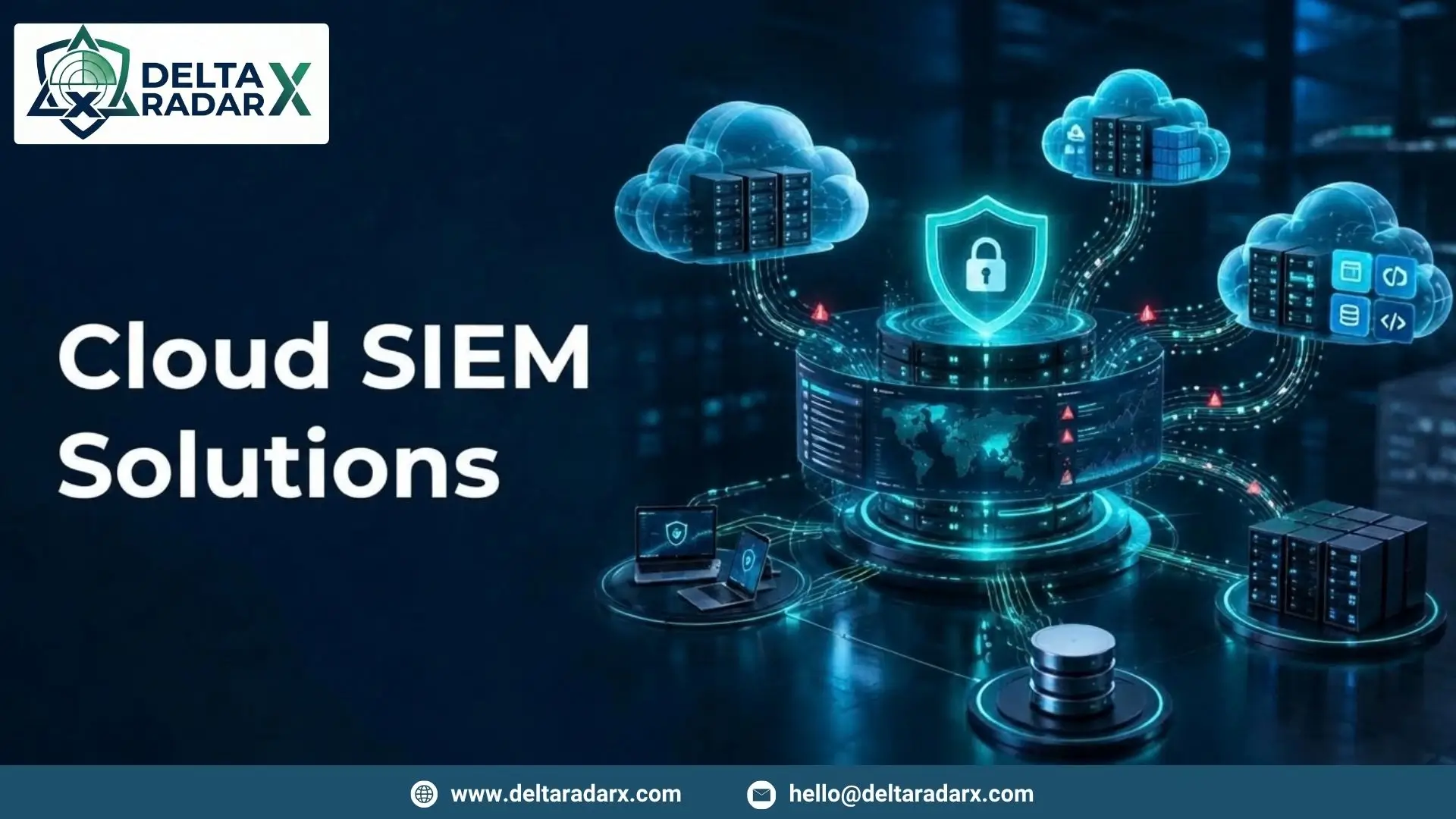
Cloud SIEM solutions help organizations collect, analyze, and monitor security data through a cloud-based Security Information and Event Management platform.
Instead of maintaining a complete SIEM infrastructure on local servers, organizations can use a cloud platform to centralize security monitoring and analysis.
What Are Cloud SIEM Solutions?
Cloud SIEM solutions are security monitoring platforms that collect and analyze logs and security events in a cloud environment.
A traditional SIEM may require organizations to manage servers, storage, software, and other infrastructure.
A cloud SIEM moves much of this infrastructure to the service provider.
This allows security teams to focus more on monitoring and investigation.
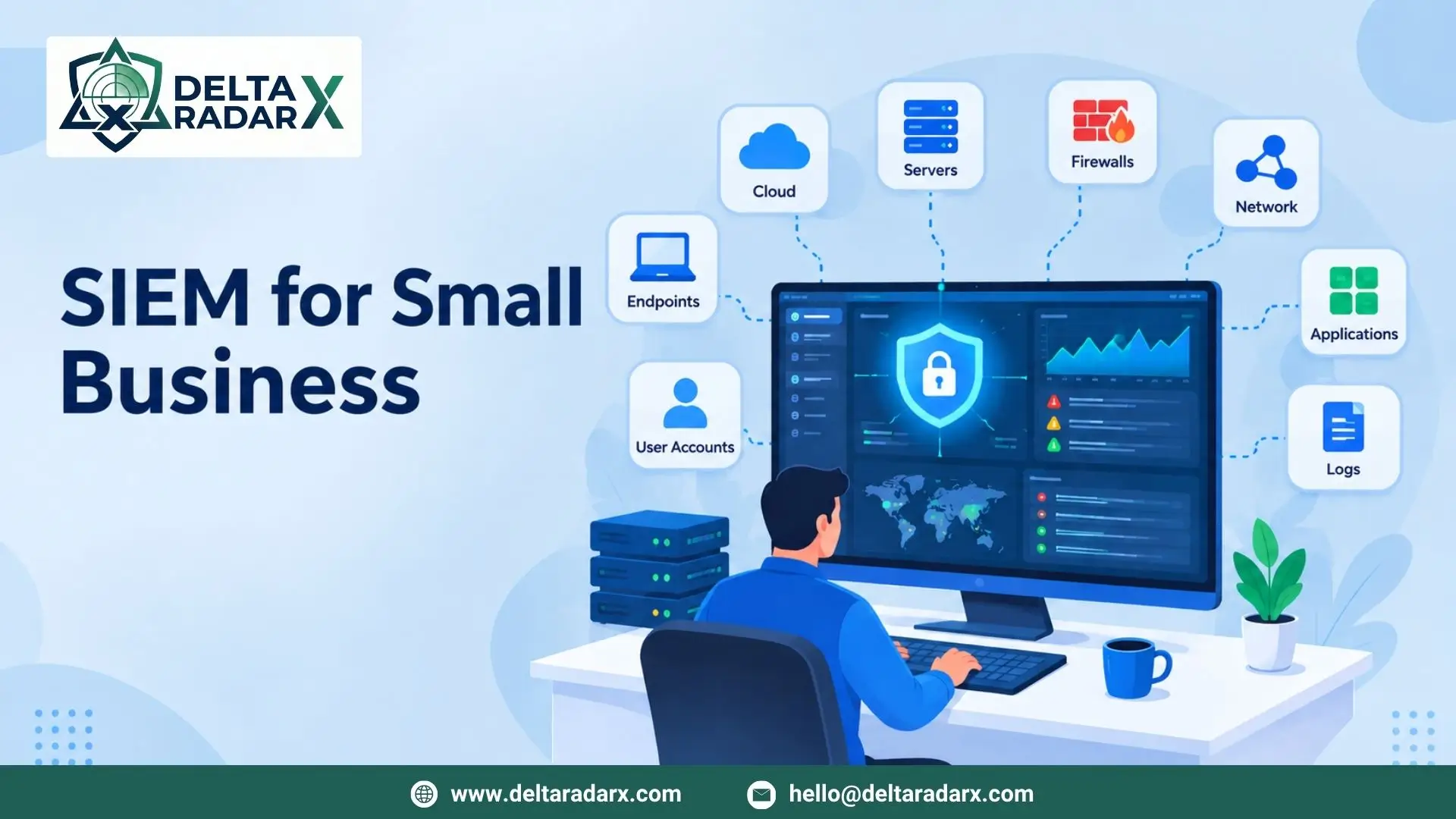
A cloud SIEM can collect data from:
- Firewalls
- Servers
- Endpoints
- Cloud platforms
- Applications
- Network devices
- Identity systems
- Email services
- Security tools
The platform then analyzes this information to identify suspicious activity.
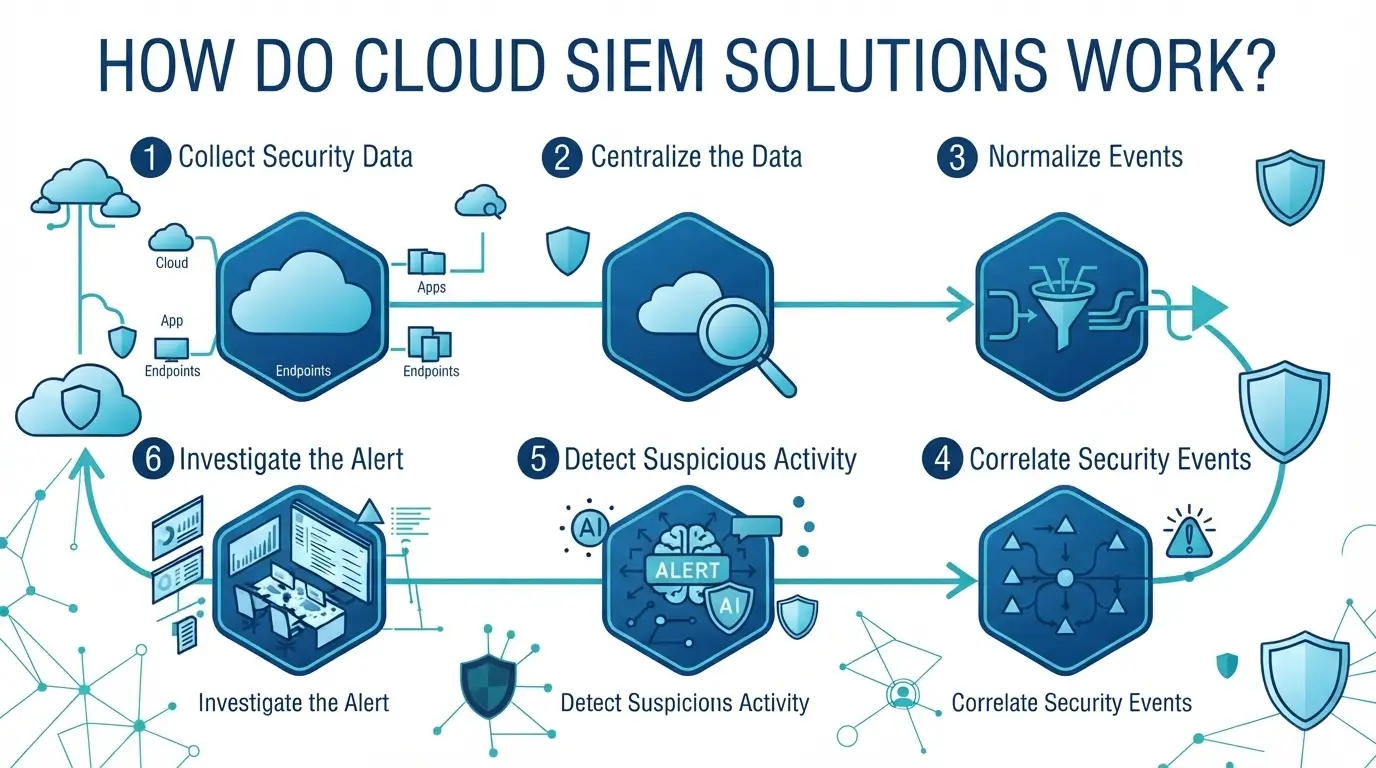
How Do Cloud SIEM Solutions Work?
A cloud SIEM generally follows a simple process.
1. Collect Security Data
The first step is data collection.
The SIEM receives logs and events from connected systems.
These may include authentication logs, firewall events, endpoint alerts, application logs, and cloud activity.
2. Centralize the Data
The collected information is sent to the cloud SIEM platform.
This creates a centralized location for security data.
Security analysts can then review information from different systems without checking every source separately.
3. Normalize Events
Different systems often use different log formats.
A cloud SIEM can normalize this information so that events can be analyzed more consistently.
This makes it easier to compare activity from different sources.
4. Correlate Security Events
A single event may not look dangerous on its own.
However, several related events may indicate an attack.
For example, a failed login may be normal.
But hundreds of failed logins followed by a successful login and unusual network activity may indicate a potential account compromise.
Cloud SIEM solutions can correlate these events.
5. Detect Suspicious Activity
The platform can use detection rules, analytics, threat intelligence, and behavioral analysis to identify potential threats.
When suspicious activity is detected, the SIEM can generate an alert.
6. Investigate the Alert
Security analysts can review the events connected to an alert.
They can investigate the source, affected systems, users, timestamps, and related activity.
This provides better context during an investigation.
Cloud-Based SIEM Solutions vs Traditional SIEM
Cloud-based SIEM solutions differ from traditional on-premises SIEM platforms mainly in how the infrastructure is deployed and managed.
| Feature | Traditional SIEM | Cloud SIEM |
|---|---|---|
| Deployment | On-premises infrastructure | Cloud platform |
| Infrastructure | Managed by organization | Mostly managed by provider |
| Scalability | Requires additional infrastructure | Easier to scale |
| Maintenance | Internal responsibility | Lower infrastructure burden |
| Remote Access | May require additional configuration | Generally easier |
| Data Storage | Local or private infrastructure | Cloud-based storage |
| Updates | Often managed internally | Usually handled by provider |
Both approaches can provide strong security monitoring.
The better option depends on the organization’s infrastructure, compliance requirements, budget, and security strategy.
Key Features of Cloud SIEM Solutions
Modern cloud SIEM platforms can provide several security capabilities.
Centralized Log Management
Cloud SIEM brings logs from different systems into one platform.
This makes it easier for security teams to search and analyze security events.
Real-Time Security Monitoring
Security teams can monitor incoming events and identify suspicious activity as it occurs.
Real-time monitoring can help reduce the time between detection and investigation.
Threat Detection
Cloud SIEM can use rules and analytics to identify potential threats.
These detections may include:
- Brute-force attacks
- Suspicious logins
- Malware activity
- Privilege abuse
- Unusual network activity
- Data access anomalies
Security Analytics
A SIEM can analyze large volumes of security data.
Analytics can help identify patterns that may not be obvious when individual events are viewed separately.
Threat Intelligence
Threat intelligence can provide information about known malicious IP addresses, domains, indicators, and other threats.
This information can improve the context of security alerts.
Alert Management
A large environment can produce thousands of security events.
Cloud SIEM solutions help security teams organize and prioritize alerts.
This allows analysts to focus on events that require attention.
Dashboards and Reporting
Security dashboards can provide a visual overview of security activity.
Teams can use dashboards to monitor:
- Security alerts
- Login activity
- Network events
- Threat activity
- System events
- Compliance information
Reports can also help security teams communicate security findings to management.
Benefits of Cloud SIEM Solutions
Cloud SIEM can provide several advantages for modern organizations.
Easier Scalability
Cloud environments can handle changing data requirements more easily.
As an organization grows, the amount of security data may also increase.
A cloud SIEM can make it easier to expand monitoring without purchasing and maintaining additional SIEM hardware.
Lower Infrastructure Management
With an on-premises SIEM, organizations may need to manage servers, storage, updates, and other infrastructure.
Cloud SIEM reduces much of this infrastructure burden.
As a result, internal teams can spend more time on security operations.
Centralized Visibility
Security data from different environments can be monitored from one platform.
This is particularly useful for organizations with:
- Remote employees
- Multiple offices
- Cloud applications
- Hybrid infrastructure
- Distributed networks
Faster Deployment
Cloud SIEM platforms can often be deployed without building a large physical infrastructure.
Organizations can connect supported data sources and begin collecting security information.
The actual deployment time depends on the platform and environment.
Remote Accessibility
Cloud platforms can make security information accessible to authorized teams from different locations.
This can be useful for distributed security operations.
Continuous Updates
Cloud SIEM providers generally manage platform updates and improvements.
This can reduce the amount of maintenance required from internal teams.
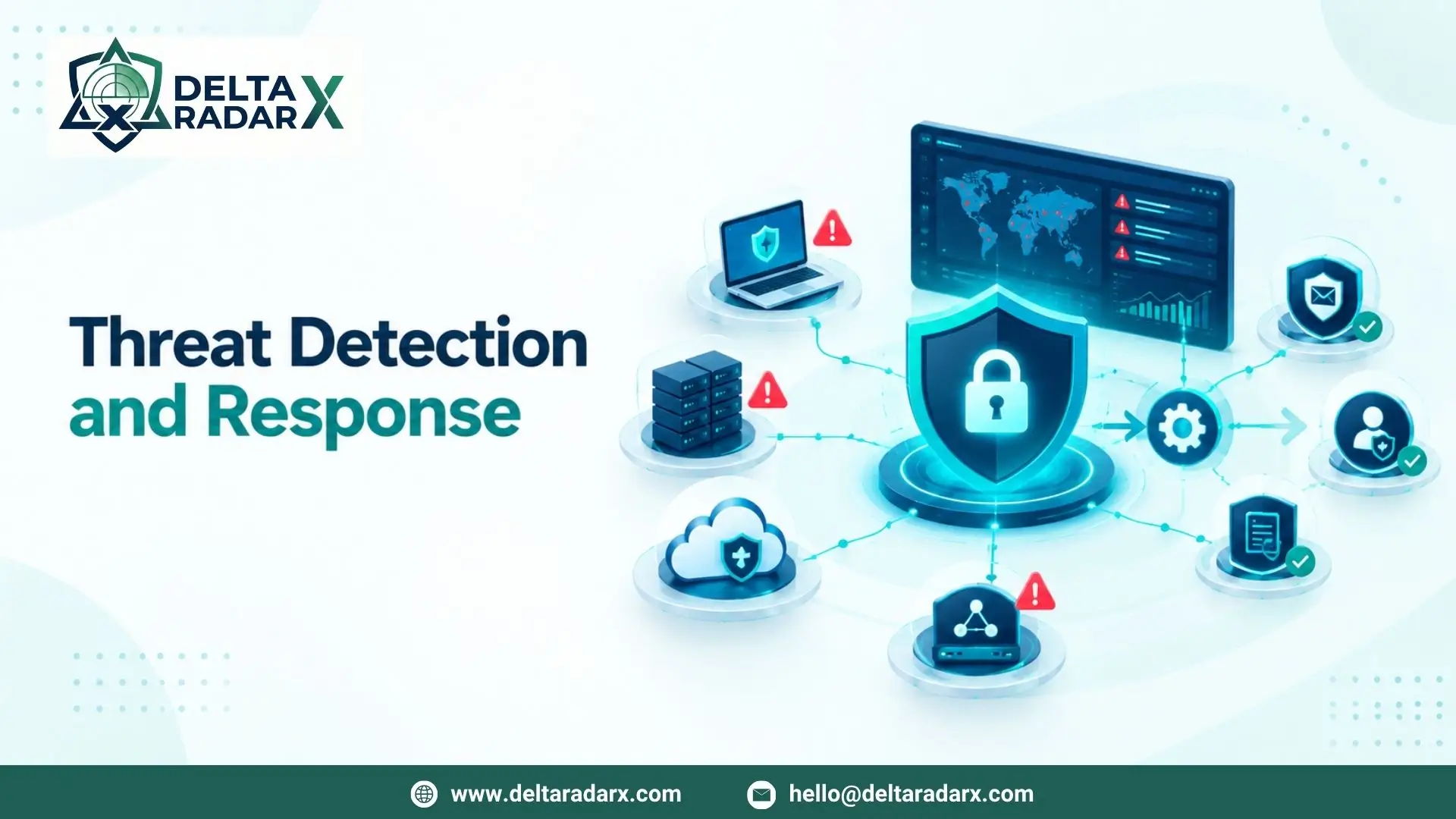
Cloud SIEM for Threat Detection
Threat detection is one of the main reasons organizations use SIEM platforms.
A cloud SIEM can collect events from different systems and look for suspicious patterns.
For example, consider a potential account attack.
The SIEM may detect:
- Multiple failed login attempts.
- A successful login from an unusual location.
- Access to a sensitive application.
- Unusual data activity.
- Suspicious network connections.
Individually, some of these events may not trigger a serious concern.
Together, they may indicate a potential security incident.
This is where event correlation becomes valuable.
Security analysts can investigate the connected events and determine whether further action is required.
Cloud SIEM for Remote Workforces
Remote work has changed the way organizations manage security.
Employees may access company resources from different locations and devices.
They may also use cloud applications throughout the working day.
This creates additional security data.
Cloud SIEM solutions can help centralize information from these environments.
For example, security teams can monitor:
- Remote login activity
- VPN events
- Endpoint activity
- Cloud application access
- Identity events
- Network connections
This can help organizations maintain visibility even when users and systems are distributed.
Cloud SIEM for Hybrid Environments
Many organizations use both cloud and on-premises infrastructure.
This creates a hybrid environment.
Security teams may need to monitor servers, cloud workloads, endpoints, applications, and network devices at the same time.
A cloud SIEM can bring data from these different environments together.
This provides a more centralized view of security activity.
For organizations using multiple cloud services, integration capabilities are especially important.
Before selecting a platform, businesses should check which cloud providers, applications, and security tools it supports.
Cloud SIEM and Compliance
Security monitoring can also support compliance requirements.
Organizations may need to maintain records of security activity and demonstrate that appropriate monitoring controls are in place.
A SIEM can help with:
- Log collection
- Security event monitoring
- Audit trails
- Alert tracking
- Reporting
- Investigation records
However, SIEM alone does not guarantee compliance.
Organizations must still implement the controls required by their specific regulations and standards.
Cloud SIEM and Threat Intelligence
Threat intelligence can improve SIEM detection.
For example, a SIEM may receive a network event involving an external IP address.
Threat intelligence can help determine whether that IP address has been associated with malicious activity.
This additional context can help analysts prioritize alerts.
Threat intelligence can include information about:
- Malicious IP addresses
- Suspicious domains
- Malware indicators
- Attack techniques
- Known threat actors
- Compromise indicators
Combining SIEM data with threat intelligence can improve the investigation process.
Cloud SIEM vs SIEM as a Service
Cloud SIEM and SIEM as a Service are related concepts.
A cloud SIEM refers to a SIEM platform delivered through cloud infrastructure.
SIEM as a Service may include the platform as well as additional services from a provider.
Depending on the provider, these services may include:
- SIEM deployment
- Log management
- Security monitoring
- Alert investigation
- Threat detection
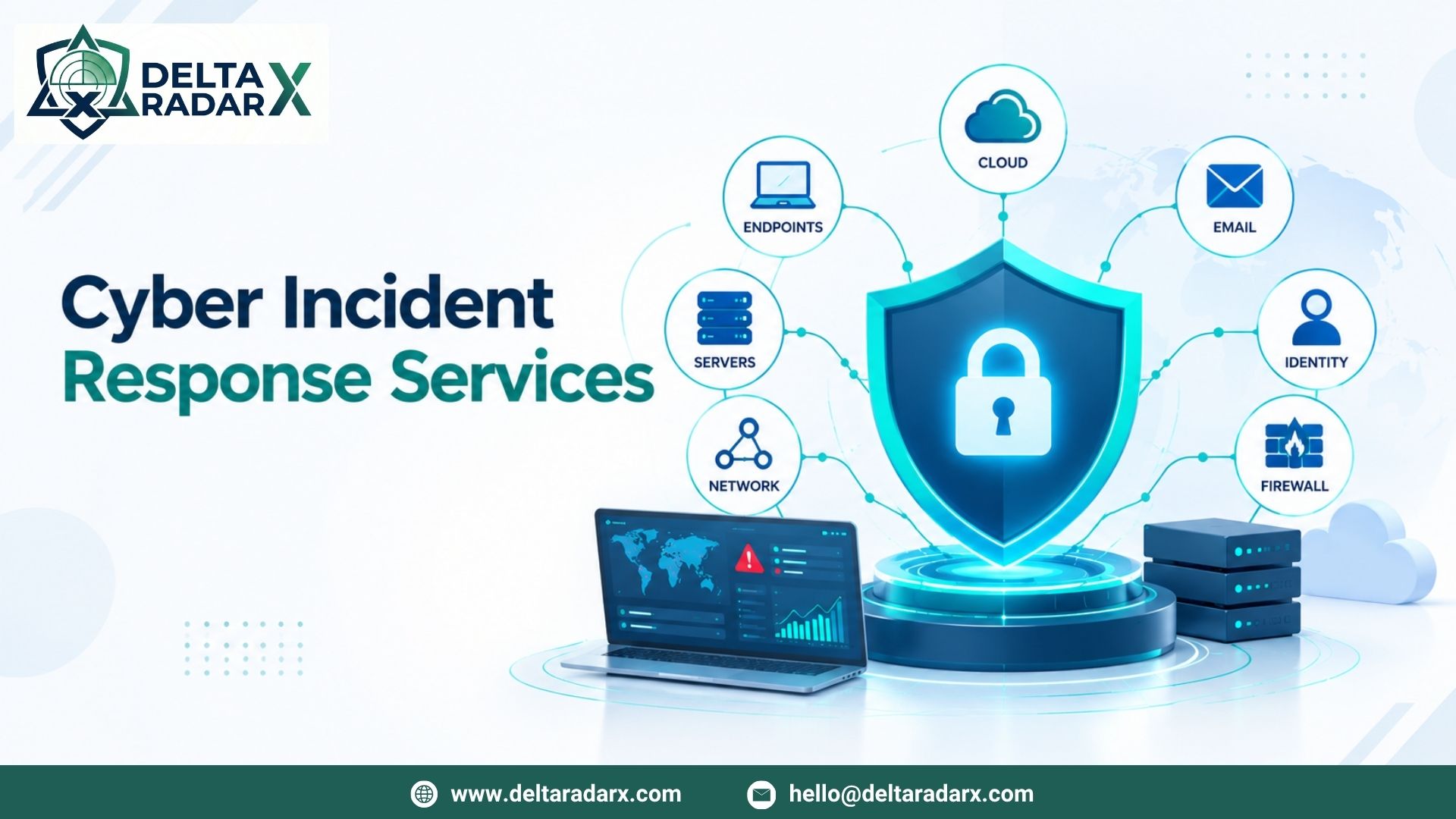
- Incident response
- Reporting
Therefore, organizations should look beyond the platform itself when comparing managed SIEM offerings.
Cloud SIEM vs Managed SIEM
A cloud SIEM platform does not automatically mean that security monitoring is fully managed.
There is an important difference.
With a cloud SIEM, the organization may still be responsible for monitoring alerts and investigating incidents.
With managed SIEM, a security provider can perform some or all of these activities.
Managed services may include:
- 24/7 monitoring
- Alert triage
- Threat investigation
- Threat detection
- Incident response
- Compliance reporting
Organizations with limited internal security resources may benefit from a managed approach.
Challenges of Cloud SIEM Solutions
Cloud SIEM provides several benefits, but organizations should also consider its challenges.
Data Integration
A SIEM is only as useful as the data it receives.
Organizations should make sure important security sources can be connected to the platform.
Data Volume
Large environments can generate enormous amounts of log data.
Poorly configured collection can increase storage costs and create unnecessary noise.
Therefore, organizations should identify which logs are most valuable.
Alert Fatigue
Too many alerts can overwhelm security teams.
Effective detection rules and alert prioritization are important.
Configuration
Cloud SIEM still requires proper configuration.
Organizations need to configure data sources, detection rules, access controls, dashboards, and retention policies.
Security and Privacy
Security logs can contain sensitive information.
Organizations should understand how the provider stores, protects, and processes their data.
They should also review access controls and data residency requirements.
How to Choose the Right Cloud SIEM
Choosing a SIEM platform requires careful evaluation.
Start by identifying your organization’s security requirements.
Then review the following areas.
Supported Integrations
Check whether the platform supports your existing:
- Firewalls
- Endpoints
- Cloud platforms
- Servers
- Applications
- Identity systems
- Network devices
Detection Capabilities
Review how the platform detects threats.
Look for support for rules, analytics, behavioral detection, and threat intelligence.
Scalability
Consider your current log volume and expected future growth.
The platform should be able to handle your security data without creating unnecessary operational problems.
Search and Investigation
Analysts need to find relevant events quickly.
Therefore, search, filtering, correlation, and investigation capabilities are important.
Reporting
Review the available dashboards and reports.
Make sure they support security operations and any relevant compliance requirements.
Integration With Existing Security Tools
A SIEM should work well with your existing security technologies.
Strong integration can improve visibility and reduce data silos.
Cloud SIEM Solutions and DeltaRadarX
A cloud SIEM can provide centralized visibility, but effective security monitoring also requires continuous analysis and response.
DeltaRadarX supports organizations with security monitoring and detection services that can complement cloud SIEM deployments.
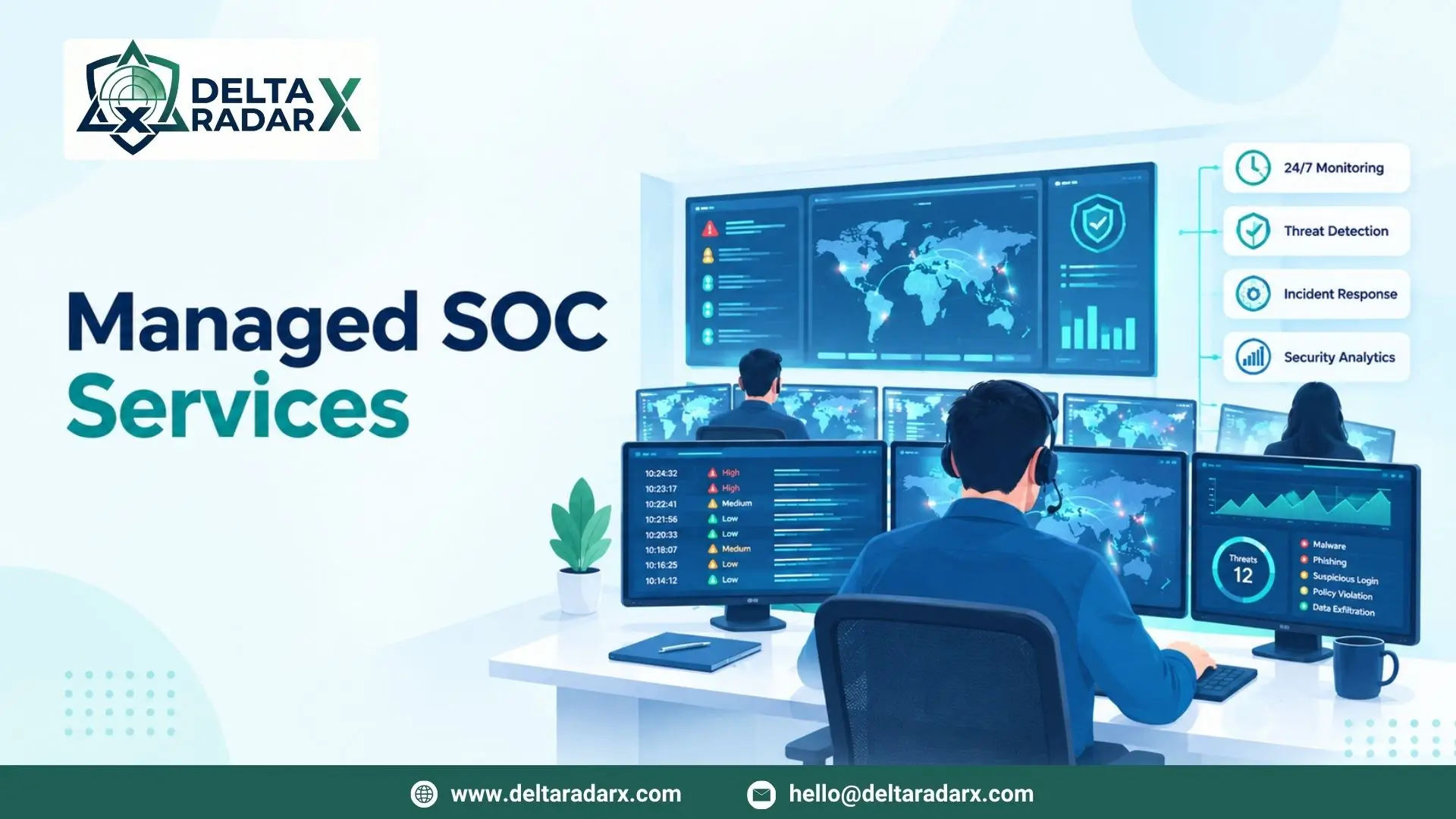
Its security capabilities include 24/7 SOC monitoring, SIEM and log monitoring, Managed Detection and Response, EDR, incident response, threat intelligence, SOAR automation, firewall and network monitoring, vulnerability auditing, and compliance reporting.
For example, security logs from firewalls, endpoints, servers, and other systems can be monitored and analyzed to identify suspicious activity.
Security teams can then investigate important alerts and determine the appropriate response.
Organizations that need additional monitoring support can also use Managed Detection and Response Services for continuous threat detection, investigation, threat hunting, and incident response.
This can be useful for businesses that do not have enough internal resources for continuous security operations.
Cloud SIEM can also work alongside existing security technologies.
For example, organizations can use SIEM Integration to connect security data from different platforms and create a more centralized monitoring environment.
Cloud SIEM Use Cases
Cloud SIEM can support many security operations.
Threat Detection
Organizations can monitor security events and identify suspicious behavior.
Account Monitoring
Security teams can investigate unusual login activity and potential account compromise.
Network Monitoring
Firewall and network events can be collected and analyzed for suspicious communication.
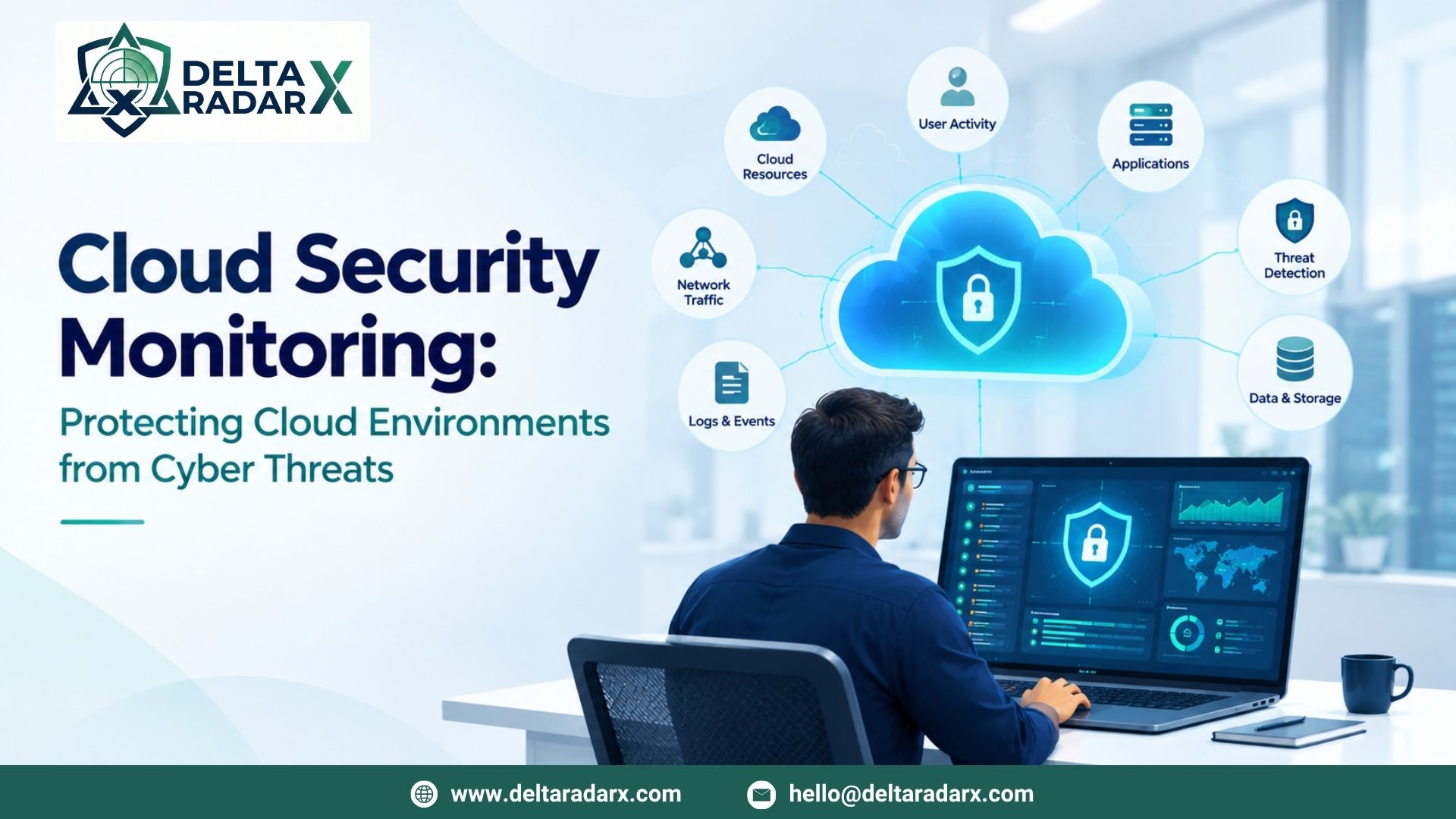
Cloud Security Monitoring
Organizations can monitor activity across cloud platforms and applications.
Incident Investigation
Analysts can correlate events from multiple sources to understand potential attacks.
Compliance Reporting
Security teams can use centralized logs and reports to support audit and compliance activities.
Security Operations
SOC teams can use SIEM data for continuous monitoring, investigation, and threat response.
Cloud SIEM Solutions for Small and Large Organizations
Cloud SIEM can be useful for organizations of different sizes.
Small organizations may benefit because they do not need to build a large SIEM infrastructure.
They can use cloud resources instead of maintaining dedicated hardware.
Larger organizations may benefit from scalability and centralized monitoring.
They may also need to monitor multiple offices, cloud platforms, applications, and business units.
However, the right solution depends on the organization’s security requirements, data volume, integrations, and available security expertise.
What to Look for in a Cloud SIEM Platform
Before selecting a platform, consider these questions:
- Which data sources can it collect?
- How easily can new sources be added?
- How does it detect threats?
- Can analysts search events quickly?
- Does it support threat intelligence?
- Can it integrate with EDR and other security tools?
- What reporting features are available?
- How is security data protected?
- What are the data retention options?
- Can the platform scale with your organization?
- Is managed monitoring available?
These questions can help organizations compare different cloud SIEM solutions based on their actual needs.
Cloud SIEM and Modern Security Operations
Modern organizations need visibility across increasingly distributed environments.
Users may work remotely.
Applications may run in the cloud.
Servers may exist across different environments.
Security tools may generate thousands of events every day.
Cloud SIEM can help bring this information together.
However, collecting logs is only the first step.
Organizations also need effective detection rules, alert prioritization, investigation processes, and incident response.
When cloud SIEM is combined with skilled security monitoring and appropriate response capabilities, organizations can build a stronger security operations strategy.