
Cyber threats are becoming harder to detect and investigate. Businesses face phishing, ransomware, credential attacks, malware, and suspicious network activity on a regular basis.
At the same time, many organizations do not have enough security professionals to monitor their environments around the clock.
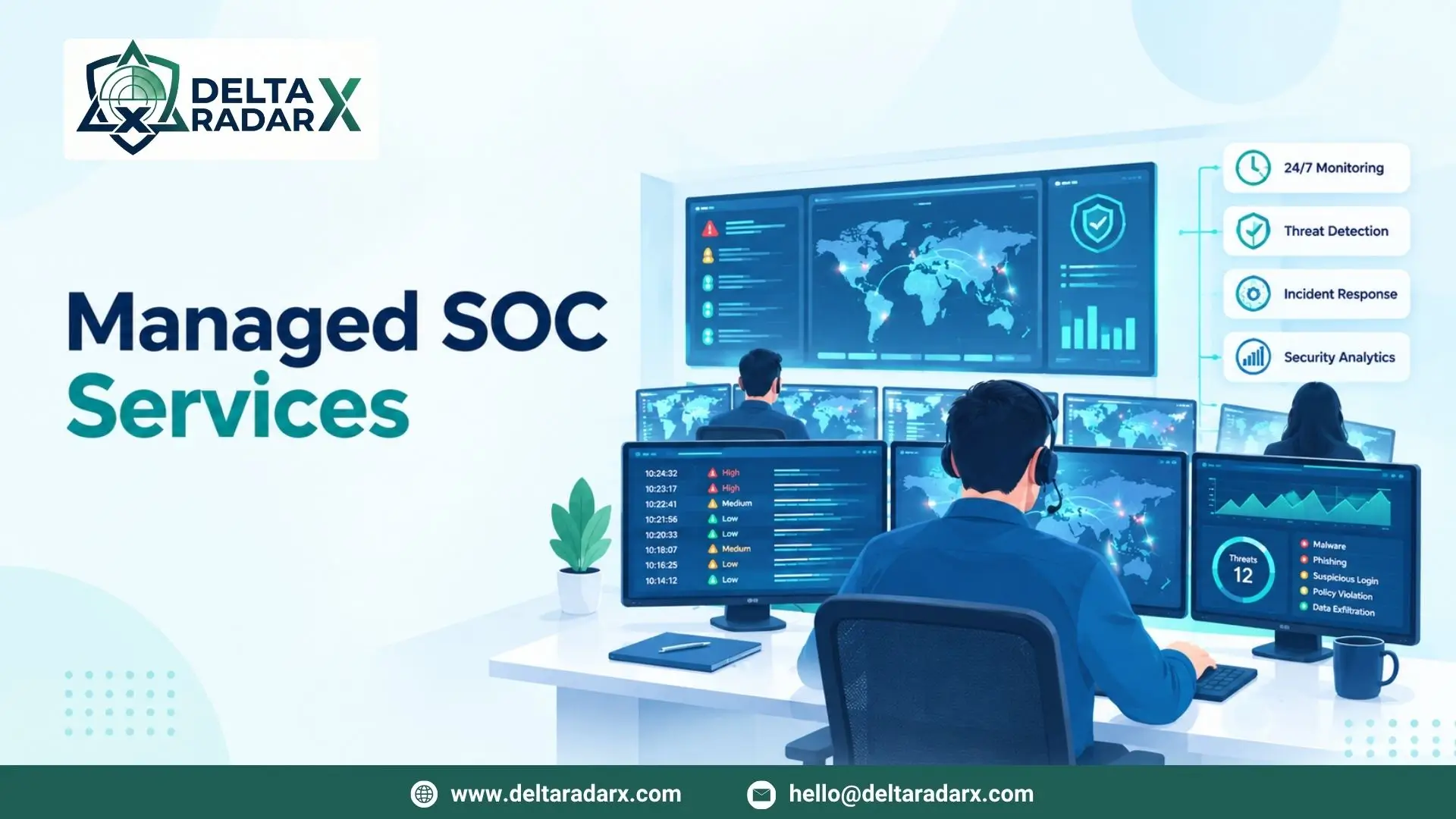
Managed detection and response services help address this challenge. They combine security monitoring, threat detection, investigation, and response with the expertise of cybersecurity professionals.
Instead of relying only on security software, businesses can work with a managed security provider. The provider monitors the environment and investigates suspicious activity.
What Are Managed Detection and Response Services?
Managed Detection and Response (MDR) is a cybersecurity service that combines technology with human security expertise.
An MDR provider monitors an organization’s environment for suspicious activity. When a potential threat is detected, security analysts investigate it and decide whether action is needed.
MDR commonly focuses on:
- Threat detection
- Security monitoring
- Alert investigation
- Threat hunting
- Incident response
- Endpoint monitoring
- Threat intelligence
- Security analysis
The main goal is to detect threats earlier. It also helps organizations respond before an incident becomes more serious.
Unlike a security tool that only generates an alert, an MDR service can provide human analysis and response support.
MDR Meaning
MDR meaning refers to Managed Detection and Response.
The term describes a managed cybersecurity service that continuously monitors an organization’s systems. It helps detect, investigate, and respond to potential threats.
The word managed means that an external security team operates or supports the monitoring service.
Detection means identifying suspicious or malicious activity.
Response means taking action after a threat has been identified.
Together, these capabilities provide a more complete approach to security monitoring.
How Do Managed Detection and Response Services Work?
MDR follows a continuous security process.
First, security data is collected from different parts of the organization’s environment. Security technologies then analyze this data and look for suspicious behavior.
Security analysts review important alerts. If they confirm malicious activity, the MDR team follows the agreed response process.
Security Data Collection
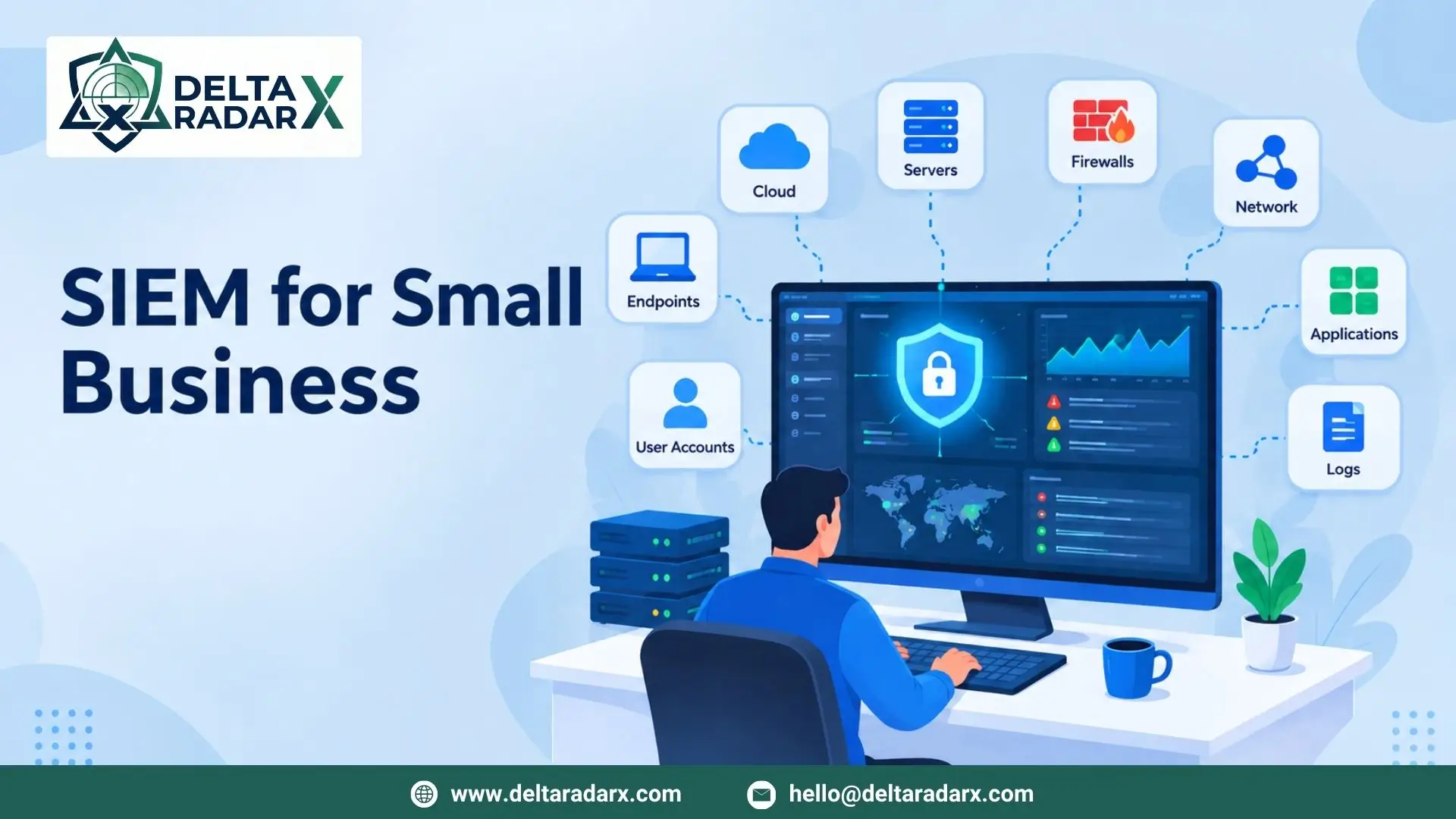
MDR services can collect security information from multiple sources.
These sources may include:
- Endpoints
- Servers
- Firewalls
- Network devices
- Cloud platforms
- Applications
- Identity systems
- Security logs
Combining information from different sources gives analysts more context during investigations.
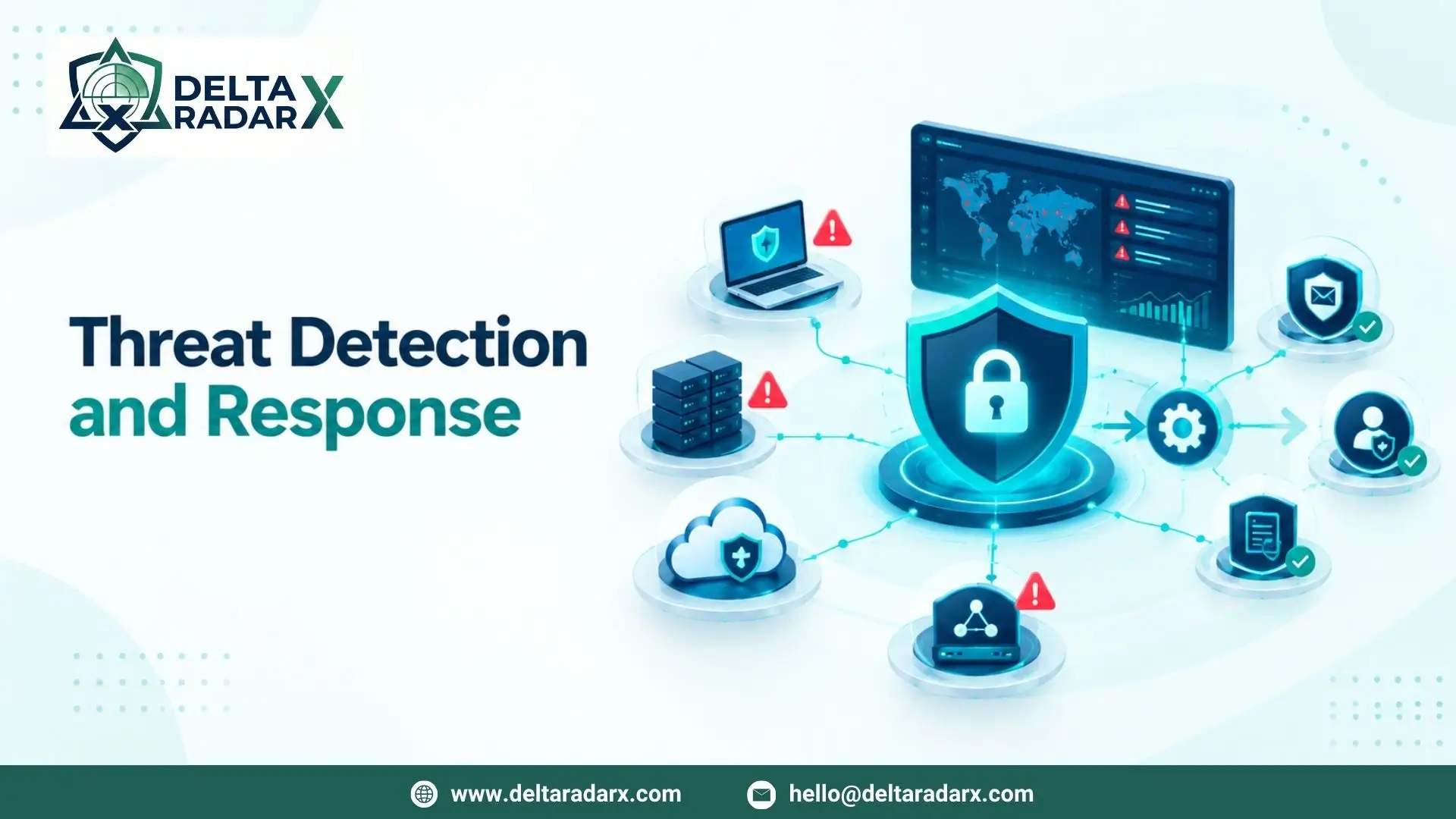
Threat Detection
Security tools analyze activity and look for indicators of suspicious behavior.
Detection can involve known threat indicators, unusual processes, abnormal login activity, or suspicious network connections.
Behavioral patterns can also help identify potential threats.
Alert Investigation
Not every alert represents a real attack.
Security analysts review important alerts and investigate the surrounding activity.
They may check the affected device, user account, network connection, process, and historical activity.
This helps separate genuine threats from false positives.
Threat Validation
After investigating an alert, analysts determine its potential risk.
They may classify the event as:
- False positive
- Suspicious activity
- Potential threat
- Confirmed incident
This classification helps determine the next step.
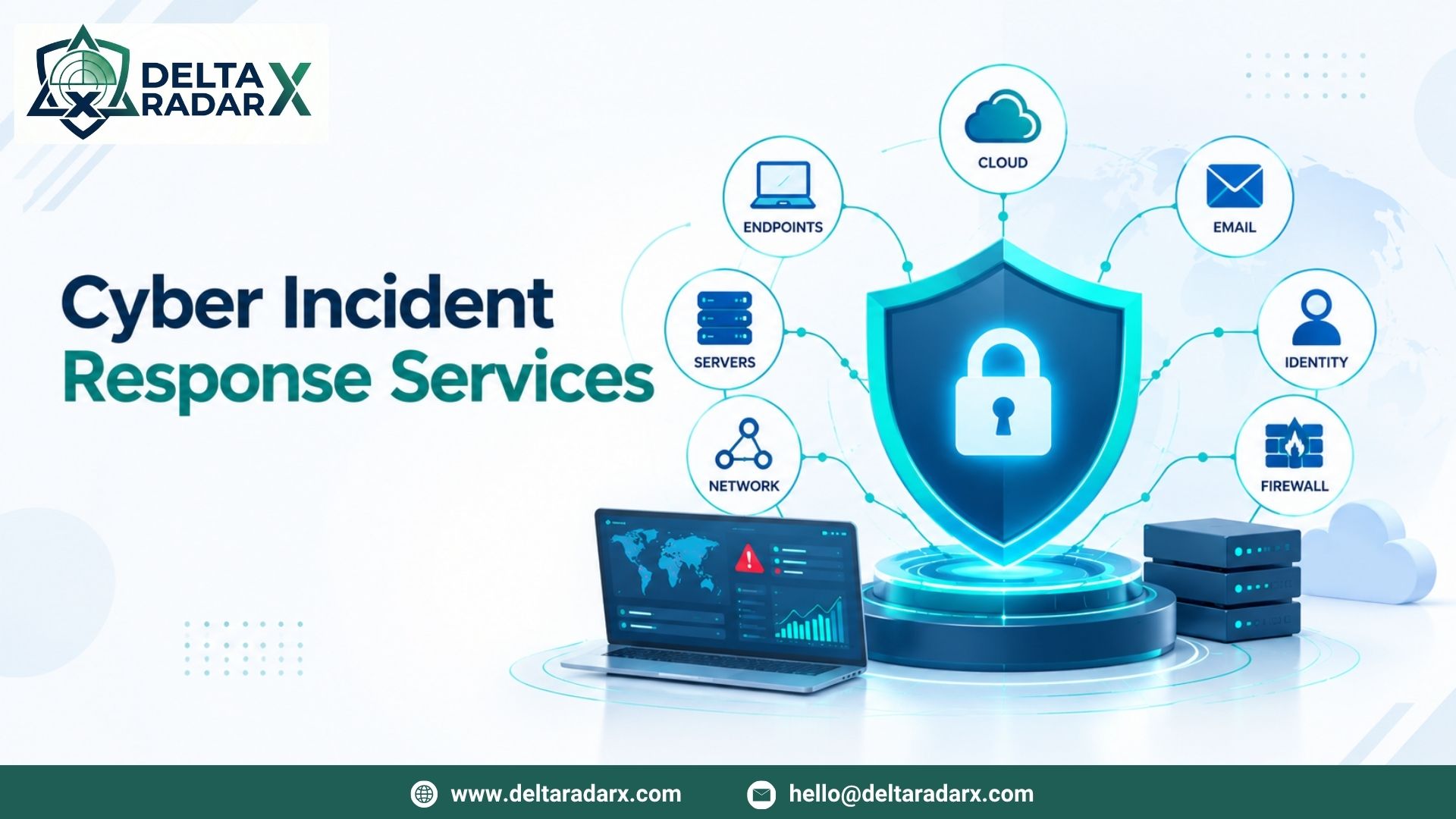
Response and Containment
When a threat is confirmed, the MDR team can support containment and response.
Depending on the service agreement, actions may include isolating an endpoint or blocking malicious activity.
The team may also disable a compromised account or escalate the incident.
The exact response depends on the organization’s requirements and the type of threat.

Key Features of MDR Services
MDR services can include several important security capabilities.
24/7 Security Monitoring
Threats can appear at any time.
Continuous monitoring allows security teams to review important activity outside normal business hours.
This is particularly useful for organizations that cannot maintain their own 24/7 security team.
Threat Detection
MDR combines security technologies with human analysis to identify potential threats.
This approach can provide more context than automated alerts alone.
Alert Triage
Security analysts prioritize alerts based on their potential severity.
This helps reduce the impact of alert overload and allows analysts to focus on important events.
Threat Investigation
Analysts investigate suspicious events and look for related activity across the environment.
This can help determine the scope of a potential incident.
Incident Response
MDR teams can support organizations when a security incident is confirmed.
Depending on the service, this can include containment, investigation, escalation, and recovery support.
Threat Intelligence
Threat intelligence can add useful context to suspicious IP addresses, domains, files, and other indicators.
Analysts can use this information during security investigations.
MDR Tools
MDR providers use multiple technologies to monitor and protect an organization’s environment.
The exact technology stack can vary between providers.
EDR
Endpoint Detection and Response (EDR) provides visibility into endpoint activity.
It can help security teams investigate processes, files, connections, and suspicious behavior on devices.
SIEM
A SIEM platform collects and analyzes security events from multiple sources.
It can help analysts correlate events and identify relationships between different activities.
Organizations can also use SIEM Integration to connect security data sources and improve centralized visibility.
Network Monitoring
Network monitoring helps identify unusual traffic and suspicious connections.
It can provide additional context during security investigations.
Threat Intelligence Platforms
Threat intelligence tools provide information about known threats and indicators.
This information can help analysts determine whether a suspicious domain, IP address, or file has been associated with malicious activity.
SOAR
Security Orchestration, Automation and Response (SOAR) can automate selected security workflows.
Automation can reduce repetitive tasks. It can also help security teams respond more efficiently to certain events.
Managed Threat Hunting
Managed threat hunting is a proactive security activity.
Security professionals search for suspicious behavior that automated detection may not have identified.
Traditional monitoring usually starts when a security tool generates an alert.
Threat hunting takes a more proactive approach. Analysts actively search for signs of compromise or unusual behavior.
Why Is Threat Hunting Important?
Attackers can sometimes avoid traditional security controls.
They may use legitimate tools, compromised credentials, or techniques that do not immediately trigger an obvious alert.
Threat hunting gives security teams another way to identify suspicious activity.
What Do Threat Hunters Look For?
Threat hunters may investigate:
- Unusual login patterns
- Suspicious processes
- Unexpected network connections
- Abnormal administrative activity
- Unusual file access
- Privilege changes
- Signs of malware
- Indicators of compromise
The findings can also help improve future detection rules.
Managed Threat Hunting vs. Automated Detection
Automated detection looks for activity that matches configured rules or behavioral patterns.
Managed threat hunting adds human investigation and proactive searching.
Both approaches can work together.
Automated tools provide continuous data analysis. Security analysts then use their experience to investigate activity that may not fit a simple detection rule.
MDR Providers
Managed detection and response providers offer security monitoring and response services to organizations that need additional cybersecurity support.
Providers can differ significantly in their technology, expertise, response capabilities, and service coverage.
When evaluating MDR providers, organizations should consider several factors.
24/7 Monitoring
Check whether the provider offers continuous monitoring.
Also confirm whether security analysts are available around the clock.
Detection Capabilities
Review the technologies and detection methods used by the provider.
A strong service should monitor the areas of the environment that are most important to the organization.
Human Analysis
Automated alerts are useful, but human investigation can add important context.
Ask how alerts are investigated and prioritized.
Response Capabilities
Understand what the provider can do after detecting a threat.
Some services only notify customers.
Others may provide containment or response actions.
Threat Hunting
Check whether proactive threat hunting is included.
This can be valuable for organizations that want to search for threats that automated detection may miss.
Reporting
Security reports should provide useful information about alerts, incidents, trends, and recommendations.
Clear reporting can also help security teams understand recurring problems.
Integration
The provider should be able to work with the organization’s existing security technologies.
These may include SIEM, EDR, firewalls, cloud platforms, identity systems, and other tools.
MDR Providers vs. Traditional Security Monitoring
Traditional security monitoring often focuses on collecting alerts and sending notifications to customers.
MDR takes a broader approach.
An MDR service can investigate suspicious activity and correlate information from multiple sources.
It can also support threat hunting and response actions.
This difference can be important for organizations that do not have enough internal staff to investigate every important alert.
Benefits of Managed Detection and Response
MDR can provide several benefits for organizations.
Continuous Security Coverage
Businesses can receive security monitoring beyond normal working hours.
This can help reduce gaps in security coverage.
Access to Security Expertise
Organizations can gain access to trained security analysts without building a large internal team.
This can be useful for businesses with limited cybersecurity resources.
Faster Investigation
Dedicated analysts can investigate important alerts and provide additional context.
This can help organizations understand potential threats more quickly.
Reduced Alert Fatigue
MDR teams can help prioritize meaningful alerts instead of treating every notification equally.
This allows analysts to focus on higher-priority events.
Proactive Threat Hunting
Threat hunting adds another layer of security.
It involves searching for suspicious activity before it becomes a confirmed incident.
Flexible Security Operations
Organizations can scale managed security support as their environment changes.
This can make MDR suitable for businesses with changing security requirements.
Challenges of MDR Services
MDR can be useful, but organizations should also understand its limitations.
Provider Selection
Not every MDR provider offers the same level of monitoring or response.
Organizations should carefully review the service scope before making a decision.
Integration Complexity
Connecting multiple systems can require configuration and ongoing maintenance.
Organizations should understand what systems the provider can integrate with.
Response Permissions
The provider may need specific permissions to perform containment or response actions.
These permissions should be clearly defined before the service begins.
Communication
Security teams need clear communication channels for urgent incidents.
The organization and provider should agree on escalation procedures and response responsibilities.
How to Choose an MDR Service
Choosing the right service starts with understanding your security requirements.
First, identify the systems that need monitoring.
Next, determine whether you need 24/7 coverage, threat hunting, incident response, or all three.
Then, evaluate the provider’s technology stack and security expertise.
Ask how the provider handles critical alerts.
Also ask how quickly customers are notified when a serious incident is detected.
It is important to understand what response actions the provider can perform.
Finally, review reporting, integrations, pricing structure, and service-level expectations before making a decision.
MDR at DeltaRadarX
Effective managed security requires more than simply collecting alerts.
Organizations need continuous visibility, reliable detection, investigation, and response.
DeltaRadarX provides 24/7 SOC operations, real-time SIEM and log monitoring, Managed Detection and Response (MDR), incident handling, threat intelligence, SOAR automation, EDR, network and firewall monitoring, vulnerability assessments, and compliance reporting.
These capabilities work together to provide broader visibility across an organization’s security environment.
For example, an unusual login can be investigated alongside endpoint activity, firewall events, and other security logs.
This additional context can help analysts determine whether the activity is legitimate or potentially malicious.
DeltaRadarX also supports organizations that already have internal security teams through co-managed SOC support.
This approach can provide additional monitoring capacity and security expertise without requiring a business to build a complete 24/7 security operation internally.
Organizations looking to strengthen endpoint visibility can also combine MDR capabilities with Endpoint Threat Detection.
This can help improve detection and investigation across user devices and servers.
MDR and Compliance
Security monitoring can also support organizations with compliance and audit requirements.
MDR services can help maintain records of security events, investigations, incidents, and response activities.
However, MDR does not automatically make an organization compliant.
Compliance depends on the specific regulations, controls, policies, and requirements that apply to the organization.
Security reports and monitoring records can nevertheless provide useful evidence during security reviews and audits.
MDR for Remote and Cloud Environments
Modern organizations often have employees working remotely.
They also use applications and services that run in cloud environments.
This creates additional security monitoring requirements.
MDR can help monitor activity across endpoints, cloud services, identity systems, and network connections.
Centralized monitoring is particularly useful when employees and systems are distributed across different locations.
Security analysts can investigate activity from multiple sources instead of relying on a single device or network location.
Final Thoughts
Managed detection and response services provide organizations with a combination of security technology and human expertise.
MDR can help businesses monitor their environments, investigate suspicious activity, hunt for threats, and respond to security incidents.
The service can be particularly valuable for organizations that need continuous monitoring but do not have enough internal resources to operate a 24/7 security team.
When comparing MDR providers, look beyond the technology.
Consider monitoring coverage, analyst expertise, threat hunting, response capabilities, integrations, reporting, and escalation procedures.
A well-designed MDR service can become an important part of a broader cybersecurity strategy.
It can help organizations detect threats earlier and respond more effectively.