
As IT environments become more complex, security teams must monitor information coming from a growing number of systems and platforms. Network firewalls, endpoint security tools, identity management solutions, and cloud applications all generate important security events that can help identify potential threats.
Managing these events separately can make it difficult to see the complete picture. SIEM integration solves this challenge by connecting multiple security and IT data sources to a Security Information and Event Management platform. It brings event data into a centralized environment where teams can correlate activities, recognize suspicious behavior, and investigate threats with greater visibility.
With the right integration approach, organizations can improve security monitoring, gain better visibility across their infrastructure, and handle growing volumes of security data more efficiently.
What Is SIEM?
SIEM stands for Security Information and Event Management. It is a cybersecurity technology designed to collect, process, analyze, and monitor security events from multiple sources.
Instead of checking logs separately on a firewall, server, endpoint, or cloud platform, security teams can bring relevant events into a centralized SIEM environment.
The platform can then help identify relationships between events.
For example, a failed login may not seem unusual by itself. If that login is followed by a successful authentication, access to a sensitive server, and unusual outbound network activity, the combined events may indicate suspicious behavior.
This ability to connect events is one of the main reasons organizations use SIEM.
Security Information and Event Management Definition
The Security Information and Event Management definition can be understood through two main functions.
Security information management focuses on collecting, storing, and managing security-related information.
Security event management focuses on monitoring events, detecting suspicious activity, generating alerts, and supporting investigations.
Modern SIEM platforms combine these capabilities into a centralized security monitoring system.
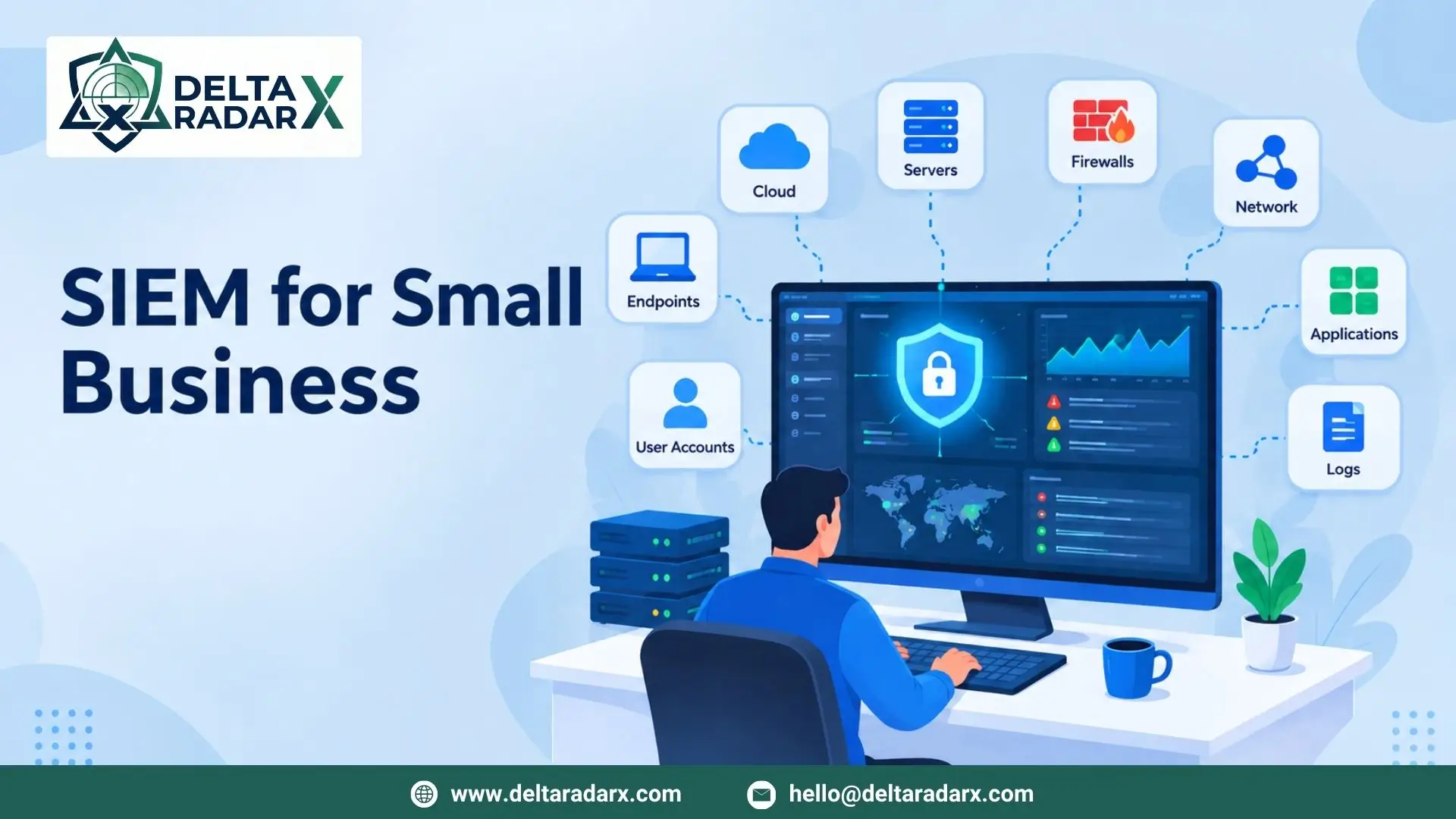
A SIEM can collect information such as:
- Login attempts
- Firewall activity
- Endpoint alerts
- Application events
- Server logs
- Cloud activity
- Network connections
- Privilege changes
- Configuration changes
The platform can analyze this information using correlation rules, detection logic, analytics, and other security techniques.
SIEM Integration
SIEM integration is the process of connecting security tools, IT systems, applications, and infrastructure to a SIEM platform so their events can be collected and analyzed centrally.
This is one of the most important parts of building an effective SIEM environment.
A SIEM platform is only as useful as the information it receives. If critical systems are not connected, analysts may miss important parts of an incident.
At the same time, sending every available event into the platform without planning can create excessive data and unnecessary alerts.
The goal is to connect the right sources and make their information useful for detection and investigation.
How Does SIEM Integration Work?
The process normally starts by identifying the systems that generate valuable security information.
These systems are connected to the SIEM using available connectors, agents, APIs, log forwarding mechanisms, or other supported methods.
The SIEM receives the events and processes them into a format that can be searched and analyzed.
Security teams can then create detection rules and correlation logic around this information.
When related events match a suspicious pattern, the SIEM can generate an alert for investigation.
Firewall SIEM Integration
Firewalls are an important SIEM data source because they provide visibility into network traffic.
Firewall logs can contain information about source and destination IP addresses, ports, protocols, blocked connections, allowed traffic, and rule activity.
When firewall events are integrated with SIEM, analysts can compare network activity with events from endpoints, users, servers, and other systems.
For example, repeated connection attempts from an external IP may become more significant if an endpoint simultaneously reports suspicious activity.
This is why Firewall Log Monitoring can provide valuable data for a wider SIEM strategy.
Endpoint SIEM Integration
Endpoints provide information about what is happening directly on computers and other devices.
Depending on the security tools being used, endpoint events may include malware detections, process activity, file changes, application launches, and suspicious behavior.
Connecting endpoint data with SIEM helps analysts understand the device behind a network event.
For instance, a firewall may show that a workstation contacted an unusual external address. Endpoint data could reveal which process initiated that connection.
This additional context can make investigation much easier.
Cloud SIEM Integration
Cloud platforms generate their own security events.
These can include account activity, API requests, administrative actions, configuration changes, authentication events, and access to cloud resources.
Integrating cloud logs with SIEM gives security teams visibility across cloud and traditional infrastructure.
This is particularly useful for organizations operating hybrid environments.
Identity and Authentication Integration
Identity systems are another important source of security information.
They can provide events related to successful and failed logins, password changes, account creation, privilege changes, and authentication methods.
When identity data reaches the SIEM, analysts can connect user activity with network and endpoint events.
This can help identify suspicious account behavior and potential credential misuse.
Application and Server Integration
Applications and servers can generate events related to user activity, system changes, errors, administrative actions, and access to sensitive resources.
Integrating these events with SIEM helps security teams investigate activity across the entire environment.
For example, an unusual user login followed by access to a sensitive application and a change on a server may provide a stronger indication of suspicious activity than any one event alone.
Why Data Normalization Matters
Different systems do not always use the same log formats.
One device may identify an IP address as source_ip, while another may use a completely different field name.
SIEM platforms can normalize information so events from different sources can be compared more consistently.
This makes searching, correlation, reporting, and detection rule creation easier.
How to Plan SIEM Integration
A successful integration should begin with the organization’s security priorities.
Start with important systems such as:
- Firewalls
- Identity platforms
- Endpoints
- Critical servers
- Cloud infrastructure
- Important applications
- Network devices
Next, determine which events from these systems are actually useful for security monitoring.
Time synchronization should also be considered. Accurate timestamps help analysts reconstruct the order of events during an investigation.
Organizations should also define appropriate log retention, access controls, data filtering, and alerting requirements.
The objective is not to collect the maximum amount of data. It is to collect useful security data that can support detection and investigation.
How Does SIEM Detect Threats?
After integrating the necessary data sources, the SIEM can analyze incoming events for suspicious activity.
Rule-Based Detection
Security teams can create rules for known patterns.
For example, multiple failed authentication attempts followed by a successful login may trigger an alert.
Event Correlation
Correlation connects events from different sources.
A suspicious login combined with unusual endpoint activity and network traffic can provide stronger evidence than each event individually.
Behavioral Analysis
Some SIEM environments can analyze normal patterns and identify unusual changes in activity.
A sudden change in a user’s login behavior or a server’s network communication may therefore receive additional attention.
Threat Intelligence
Threat intelligence can add context to security events.
For example, an IP address observed in firewall logs may be compared with known threat indicators.
This can help analysts determine whether an event deserves further investigation.
SIEM Solution
A SIEM solution provides the technology needed to collect and analyze security events.
Organizations should select a solution based on their environment rather than simply choosing the platform with the largest feature list.
Centralized Log Collection
The solution should support important data sources and provide a practical way to bring their events into one environment.
Security Analytics
Analytics and correlation capabilities help security teams identify relationships between events.
Alert Management
The platform should make it possible to prioritize important alerts and reduce unnecessary noise.
Search and Investigation
Analysts need efficient search capabilities when investigating historical activity.
Dashboards and Reporting
Dashboards provide an overview of security activity, while reports can support investigations, audits, and applicable compliance requirements.
Automation
Integration with security automation tools can help organizations automate selected investigation and response activities.
SIEM Products
There are many SIEM products available, and each has different deployment models, integrations, analytics capabilities, pricing structures, and management requirements.
When comparing products, organizations should look at several factors.
Integration Support
Check whether the product supports the firewalls, endpoints, cloud services, applications, servers, and identity systems already used by the organization.
Scalability
The SIEM should be able to handle current data volumes and support future growth.
Detection Capabilities
Consider event correlation, detection rules, behavioral analytics, threat intelligence, and other capabilities relevant to the organization’s needs.
Investigation Features
Security analysts should be able to search events quickly and follow activity across different systems.
Reporting and Compliance
Look for reporting capabilities that support internal security reviews and applicable compliance requirements.
SIEM as a Service
SIEM as a Service delivers SIEM capabilities through a service-based model.
Instead of managing every part of the infrastructure internally, an organization works with a provider that manages some or most of the SIEM environment.
The exact responsibilities depend on the provider.
Some services may focus primarily on the technology platform, while others include continuous monitoring, alert investigation, threat detection, and incident response.
Benefits of SIEM as a Service
A service-based model can offer:
- Reduced infrastructure requirements
- Access to security expertise
- Continuous monitoring
- Easier scalability
- Centralized security visibility
- Support for security investigations
It can be particularly useful for organizations that want SIEM capabilities but have limited internal security resources.
Benefits of SIEM Integration
Effective integration can improve security operations in several ways.
Centralized Visibility
Security teams can monitor events from multiple systems through one environment.
Better Threat Detection
Correlating information from different sources can reveal attack patterns that individual tools may not identify.
Faster Investigations
Analysts can search related events without manually checking multiple systems.
Improved Incident Context
Events from networks, endpoints, identities, applications, and cloud environments can be analyzed together.
Reduced Security Blind Spots
Connecting important data sources can help security teams identify activity that would otherwise remain isolated.
Better Security Operations
A well-integrated SIEM can provide a stronger foundation for continuous monitoring, investigation, and response.
Common SIEM Integration Challenges
Too Much Data
Sending every available event into SIEM can increase storage requirements and create unnecessary noise.
Organizations should prioritize useful security data.
Poorly Tuned Alerts
Excessive false positives can lead to alert fatigue.
Detection rules should be reviewed and adjusted regularly.
Missing Data Sources
If important systems are not connected, analysts may lack the information needed to investigate an incident.
Complex Environments
Large organizations may have many different vendors, cloud platforms, applications, and network technologies.
Planning integrations carefully can reduce complexity.
Lack of Security Expertise
A SIEM platform can provide powerful capabilities, but skilled professionals are still needed to interpret important alerts and investigate threats.
Best Practices for SIEM Integration
Start with critical security data sources instead of connecting everything at once.
Make sure systems use accurate and synchronized timestamps.
Normalize logs where necessary so events can be compared consistently.
Create detection rules around meaningful security scenarios and regularly tune them based on actual activity.
Review data quality and integration health to make sure important sources continue sending events.
Finally, connect SIEM with complementary security technologies such as endpoint security, threat intelligence, network monitoring, and automation.
Final Considerations
SIEM integration connects security information from different parts of an organization’s environment and turns that information into a more useful source of security visibility.
The value of SIEM comes from more than collecting logs. When firewall events, endpoint activity, authentication records, cloud events, and application logs are analyzed together, security teams can gain better context for detecting and investigating threats.