
Every laptop, workstation, server, and other connected device represents a potential entry point for cyber threats. Attackers can use malware, stolen credentials, malicious applications, phishing attacks, and software vulnerabilities to compromise endpoints and gain access to business systems.
Endpoint Threat Detection helps organizations identify suspicious activity on endpoints before it develops into a larger security incident. Modern solutions monitor endpoint behavior, analyze processes and files, detect unusual activity, and provide security teams with the information needed to investigate and respond to threats.
For businesses looking for stronger endpoint visibility and real-time protection, endpoint threat detection can provide an important layer of a modern cybersecurity strategy.
What Is Endpoint Threat Detection?
Endpoint Threat Detection is the process of continuously monitoring endpoint devices for suspicious, malicious, or abnormal activity.
Traditional antivirus primarily relies on known malware signatures. Modern endpoint threat detection solutions use a broader combination of behavioral analysis, threat intelligence, machine learning, file analysis, process monitoring, and other techniques to identify potentially malicious activity.
Endpoints can include:
- Employee laptops and desktops
- Servers
- Workstations
- Virtual machines
- Cloud workloads
- Corporate devices
- Remote employee systems
The objective is to identify threats such as malware, ransomware, unauthorized processes, suspicious scripts, credential theft, and other forms of endpoint compromise.
How Does Endpoint Threat Detection Work?
Endpoint threat detection typically combines several layers of monitoring and analysis.
Endpoint Activity Monitoring
The solution continuously observes activity occurring on protected devices. This can include processes, applications, files, network connections, user activity, and system changes.
Monitoring this activity creates a detailed picture of what is happening on an endpoint.
Behavioral Analysis
Instead of looking only for known malware, modern systems can identify behaviors associated with attacks.
For example, an application that suddenly attempts to access sensitive files, execute suspicious commands, modify security settings, and establish an unusual network connection may require investigation.
Behavioral detection can help identify previously unknown threats that do not have an existing malware signature.
Threat Intelligence
Threat intelligence adds context to suspicious endpoint activity. An endpoint security solution may compare IP addresses, domains, file hashes, and other indicators against known threat intelligence sources.
This can help security analysts determine whether an observed activity is associated with known malicious infrastructure.
Alert Generation
When suspicious behavior is detected, the platform generates a security alert. Alerts can contain information about the affected device, process, user, file, network connection, and other relevant activity.
High-quality alerts give security teams the context they need to investigate potential incidents.
Investigation and Response
After an alert is generated, analysts can investigate the endpoint and determine whether the activity is legitimate or malicious.
Depending on the solution and security policy, response actions may include isolating the endpoint, terminating a malicious process, quarantining a file, or collecting additional forensic information.
Key Features of Endpoint Threat Detection Solutions
Real-Time Monitoring
Continuous monitoring allows security teams to identify suspicious endpoint activity as it occurs rather than discovering it after an incident has already caused significant damage.
Process Monitoring
Monitoring processes helps identify suspicious applications, scripts, command execution, and potentially malicious behavior.
File and Malware Detection
Modern solutions can analyze files and identify suspicious modifications, malware, ransomware activity, and other potentially dangerous behavior.
Endpoint Isolation
When an endpoint is compromised, isolation can prevent it from communicating with other systems while the incident is investigated.
Threat Intelligence Integration
Threat intelligence can provide additional context for suspicious indicators and improve detection accuracy.
Centralized Visibility
Security teams can monitor activity across multiple endpoints from a centralized security platform instead of investigating every device individually.
Organizations that require broader device visibility can also use an Endpoint Monitoring Solution to monitor endpoint activity and security events across their environment.
Common Endpoint Threats
Endpoint threat detection solutions are designed to identify a wide range of security threats.
Malware
Malicious software can steal information, damage systems, create persistence, or provide attackers with unauthorized access.
Ransomware
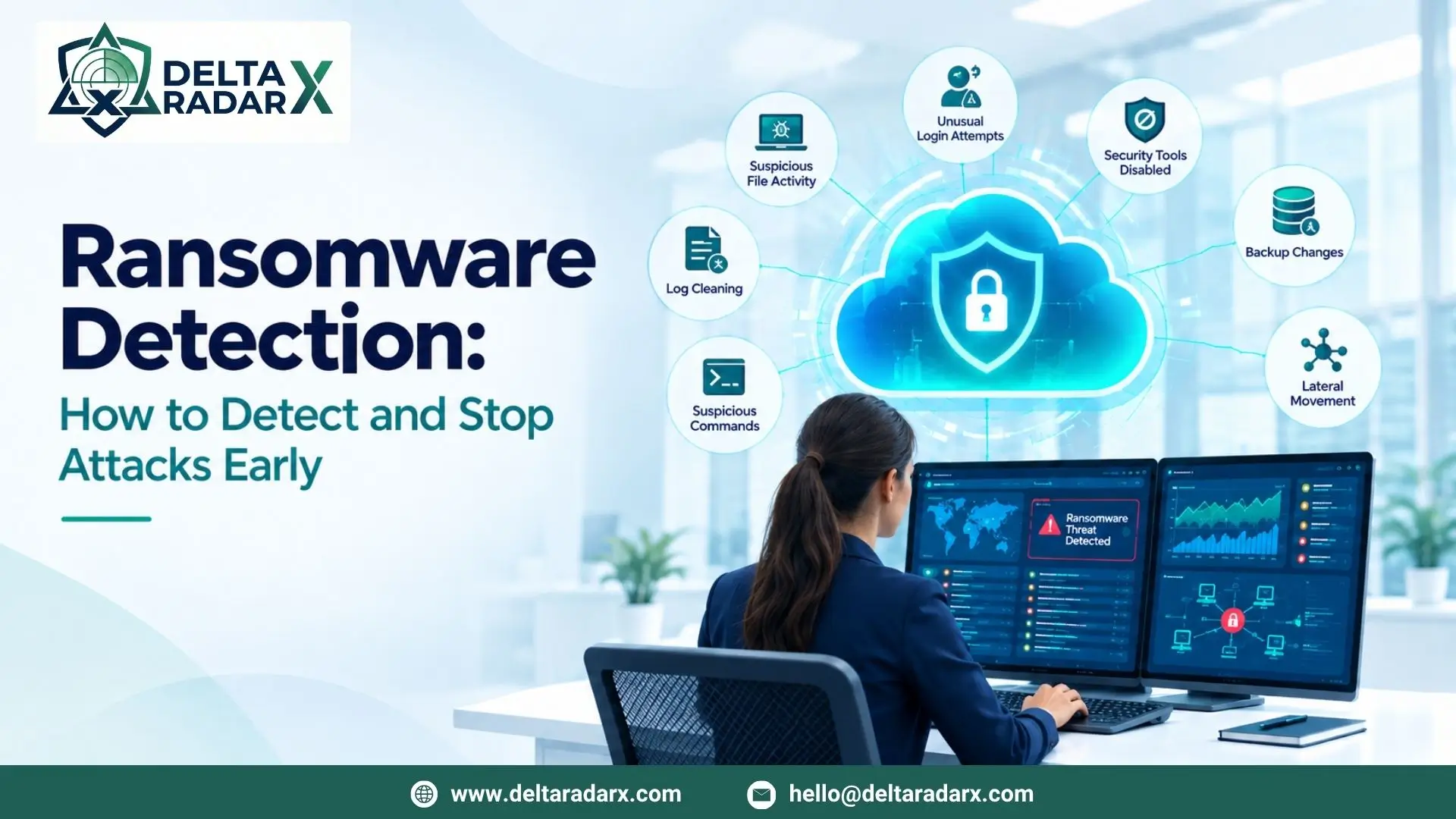
Ransomware can rapidly modify or encrypt files across compromised systems. Behavioral endpoint detection can identify unusual file activity and other ransomware indicators.
Credential Theft
Attackers may attempt to steal passwords, authentication tokens, or other credentials from compromised endpoints.
Fileless Attacks
Some attacks operate primarily through legitimate system tools rather than traditional malicious files. Behavioral analysis can help identify suspicious command execution and abnormal activity.
Malicious Scripts
Attackers can use PowerShell, scripting engines, and other legitimate tools to execute malicious commands. Monitoring command execution can help identify these techniques.
Insider Threats
Unusual endpoint behavior by legitimate users can sometimes indicate unauthorized activity, compromised accounts, or insider threats.
Benefits of Endpoint Threat Detection
Faster Threat Identification
Continuous endpoint monitoring can help security teams detect suspicious activity earlier, giving them more time to investigate and contain an incident.
Improved Endpoint Visibility
Organizations gain greater insight into processes, files, applications, users, and network connections occurring on their devices.
Better Protection Against Unknown Threats
Behavioral analysis can identify suspicious activity even when a specific malware sample has not previously been identified.
Reduced Security Risk
Early detection and rapid containment can reduce the opportunity for attackers to move from one endpoint to another.
Improved Incident Investigation
Detailed endpoint telemetry provides valuable evidence for determining what happened, which systems were affected, and how an attacker may have entered the environment.
Endpoint Threat Detection vs Traditional Antivirus
Traditional antivirus remains useful for detecting known malware, but modern attacks often use techniques that can bypass signature-based detection.
Endpoint threat detection takes a broader approach by examining behavior, processes, network activity, files, user actions, and other indicators.
For example, an unknown application that suddenly executes suspicious commands and attempts to access hundreds of files may be detected through behavioral analysis even if the application itself is not included in a traditional malware signature database.
This makes modern endpoint detection particularly valuable against evolving threats.
Endpoint Threat Detection and SIEM Integration
Endpoint security becomes even more valuable when its telemetry is integrated with centralized security monitoring.
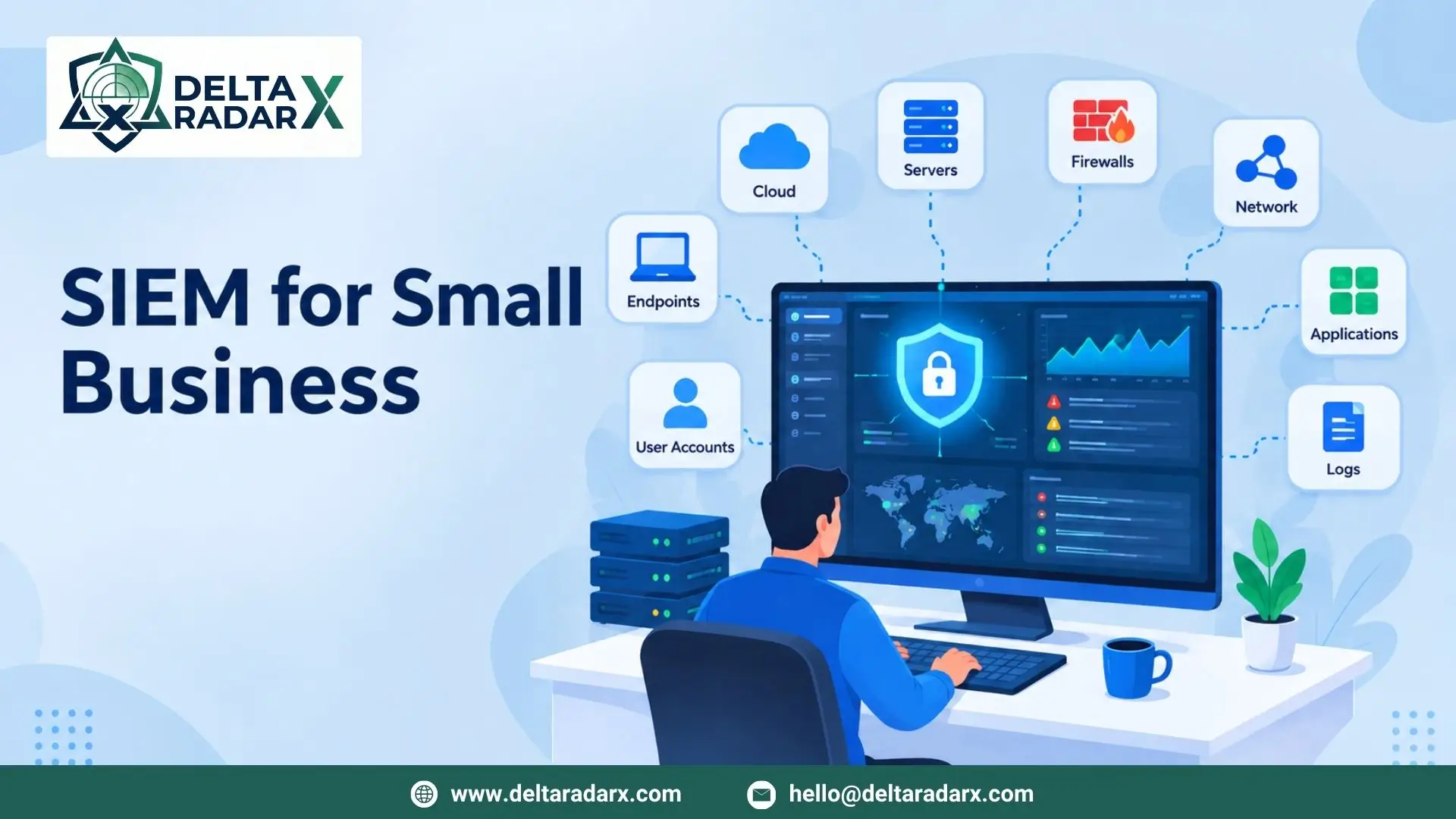
A SIEM platform can collect endpoint events alongside logs from firewalls, servers, cloud platforms, identity systems, and other security technologies. This allows security teams to correlate endpoint activity with events occurring elsewhere in the environment.
For example, suspicious endpoint behavior combined with unusual authentication activity and communication with a malicious IP address can provide stronger evidence of an active attack.
Organizations can use Managed SIEM Services to support continuous security event monitoring, alert analysis, and correlation across their infrastructure.
Endpoint Threat Detection and Automated Response
Detection is only one part of endpoint security. Organizations also need an effective response process.
When a high-confidence threat is identified, automated workflows can perform actions such as isolating an endpoint, blocking malicious indicators, terminating suspicious processes, or notifying security analysts.
Integrating endpoint detection with Automated Incident Response can reduce the time between identifying a threat and taking containment action.
However, high-impact actions should be governed by clearly defined policies and human oversight where necessary.
How to Choose an Endpoint Threat Detection Solution
Businesses evaluating endpoint threat detection solutions should consider several factors.
Detection Capabilities
Look for solutions that combine behavioral analysis, malware detection, threat intelligence, and other modern detection techniques.
Endpoint Coverage
The platform should support the operating systems, servers, cloud workloads, and other devices used by the organization.
Real-Time Visibility
Security teams should have access to current endpoint activity and meaningful security alerts.
Integration
Consider whether the solution integrates with SIEM, SOAR, threat intelligence, firewalls, identity platforms, and other security technologies.
Response Capabilities
Detection should be connected to practical response options such as endpoint isolation, process termination, file quarantine, and automated workflows.
Scalability
The solution should be able to support additional endpoints as the organization grows.
Alert Quality
A high volume of low-value alerts can overwhelm security analysts. Organizations should evaluate how the solution prioritizes threats and reduces unnecessary security noise.
Endpoint Threat Detection at DeltaRadarX
DeltaRadarX combines endpoint security capabilities with real-time SIEM and log monitoring, 24/7 SOC operations, Managed Detection and Response (MDR), incident handling, threat intelligence, SOAR automation, and network and firewall monitoring.
This integrated approach allows endpoint activity to be analyzed alongside broader security events. Security teams can investigate suspicious behavior, correlate related events, and respond to potential threats more efficiently.
Additional capabilities such as vulnerability assessments, compliance reporting, and co-managed SOC support can further strengthen an organization’s overall security operations.
Final Considerations
Endpoint Threat Detection plays an important role in protecting modern organizations from malware, ransomware, credential theft, suspicious processes, and other endpoint-based threats.
Modern solutions go beyond traditional antivirus by analyzing behavior, monitoring processes and files, using threat intelligence, and providing detailed endpoint visibility. When integrated with SIEM, SOAR, and incident response capabilities, endpoint detection can become part of a broader security monitoring and response strategy.
For organizations evaluating endpoint security solutions, the goal should not simply be to detect more activity. An effective solution should identify meaningful threats, provide useful context, support rapid investigation, and enable appropriate response actions.