
Ransomware is one of the most disruptive forms of malware facing organizations today. A successful ransomware attack can encrypt important files, interrupt business operations, compromise sensitive information, and create significant recovery costs.
Effective Ransomware Detection and Prevention requires more than a single security tool. Organizations need a combination of endpoint protection, continuous monitoring, threat detection, secure backups, access controls, employee awareness, and a well-defined incident response strategy.
Understanding how ransomware behaves and recognizing its early warning signs can help security teams detect attacks before they cause widespread damage.
What Is Ransomware?
Ransomware is a type of malware designed to prevent users or organizations from accessing their data or systems. Attackers commonly encrypt files and demand payment in exchange for a decryption mechanism.
Modern ransomware campaigns may also involve data theft. Attackers can steal sensitive information before encrypting systems and then threaten to publish or sell the stolen data if their demands are not met.
Ransomware can enter an environment through phishing emails, malicious downloads, compromised credentials, vulnerable systems, remote access services, or other attack vectors.
How Do Ransomware Attacks Work?
Although ransomware campaigns vary, many attacks follow a similar progression.
Initial Access
Attackers first need access to the target environment. Phishing emails, stolen credentials, vulnerable applications, and malicious files are common methods of gaining initial access.
Establishing Persistence
After gaining access, attackers may attempt to maintain access to compromised systems. They may create accounts, modify configurations, or use legitimate administrative tools.
Lateral Movement
Attackers may then attempt to move from one compromised system to another. This can allow them to reach file servers, databases, backups, and other critical resources.
Data Discovery and Exfiltration
Some ransomware groups search for valuable files and sensitive information before encryption. Data may be copied to attacker-controlled infrastructure.
File Encryption
The final stage may involve encrypting files across endpoints, servers, network shares, or other systems. Once files become inaccessible, attackers demand payment.
Early detection is therefore critical because stopping an attack before widespread encryption can significantly reduce its impact.

How to Detect Ransomware
Ransomware detection focuses on identifying suspicious behavior rather than relying only on known malware signatures.
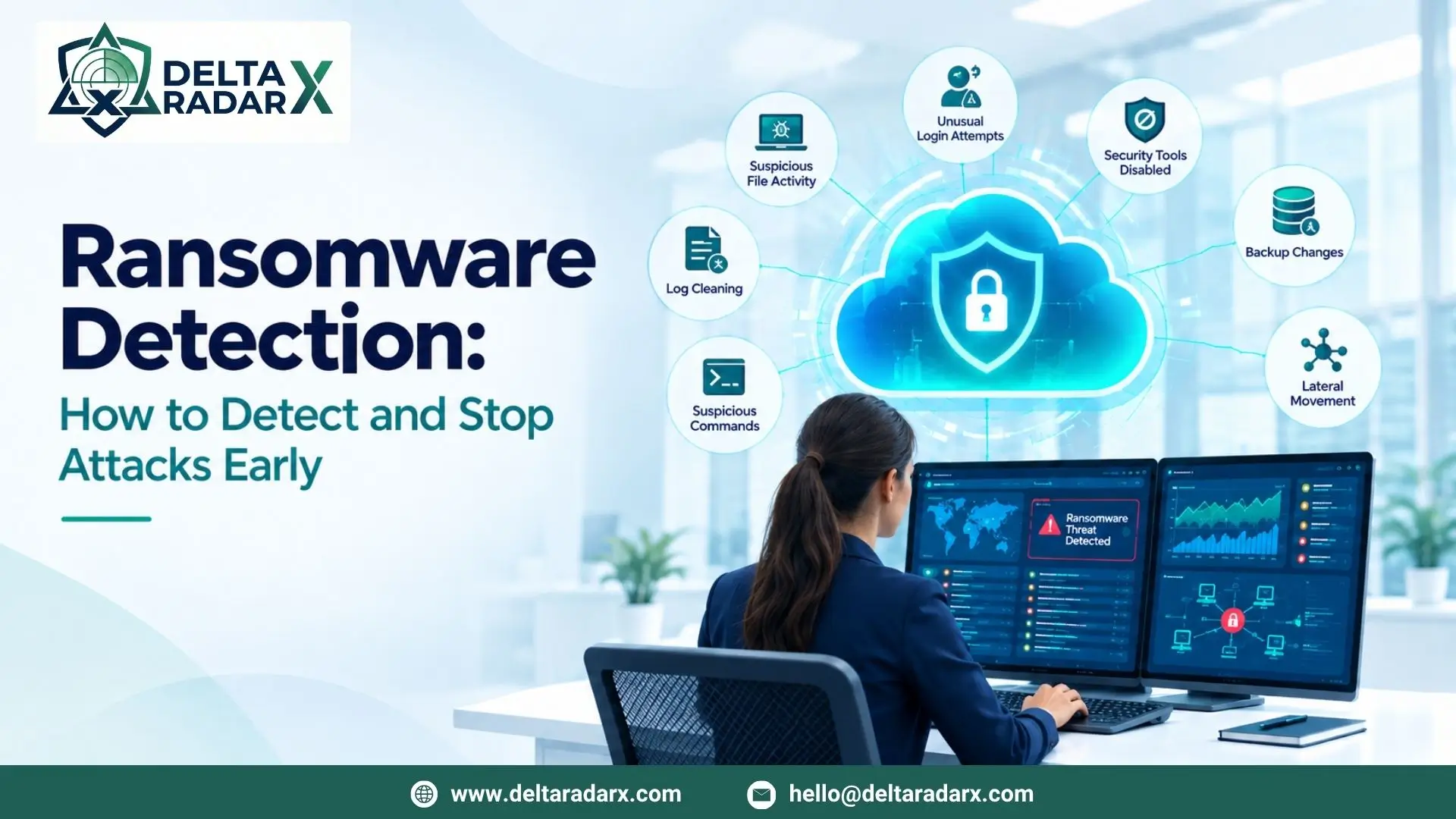
Unusual File Encryption
A sudden increase in file modifications or encryption activity can be an important ransomware indicator. If a single process begins changing large numbers of files rapidly, security teams should investigate the activity.
Suspicious Processes
Ransomware may execute unfamiliar or unexpected processes. Security teams can monitor process creation and identify applications behaving differently from normal patterns.
Abnormal Network Activity
Communication with suspicious external infrastructure can indicate that a compromised system is communicating with an attacker.
Privilege Escalation
Unexpected attempts to obtain administrative privileges can be an early warning sign of a broader attack.
Unusual Authentication Activity
Multiple failed logins, unusual geographic access, abnormal login times, or suspicious account activity may indicate compromised credentials.
Backup and Security Tool Tampering
Attackers may attempt to disable security software or delete backups before launching encryption. Unexpected changes to backup systems or security configurations should therefore receive immediate attention.
Common Signs of a Ransomware Attack
Security teams should investigate warning signs such as:
- Large numbers of files being modified quickly
- Unexpected file extensions
- Sudden changes to file permissions
- Unusual administrative activity
- Security software being disabled
- Suspicious processes running on endpoints
- Unusual network connections
- Unexpected privilege escalation
- Multiple systems showing similar suspicious behavior
- Backup deletion or modification
- Unusual data transfer volumes
One sign alone does not always confirm ransomware. Analysts should correlate multiple events to determine whether the activity represents a genuine threat.
Ransomware Detection Technologies
Organizations can use several security technologies to improve ransomware detection.
Endpoint Detection and Response
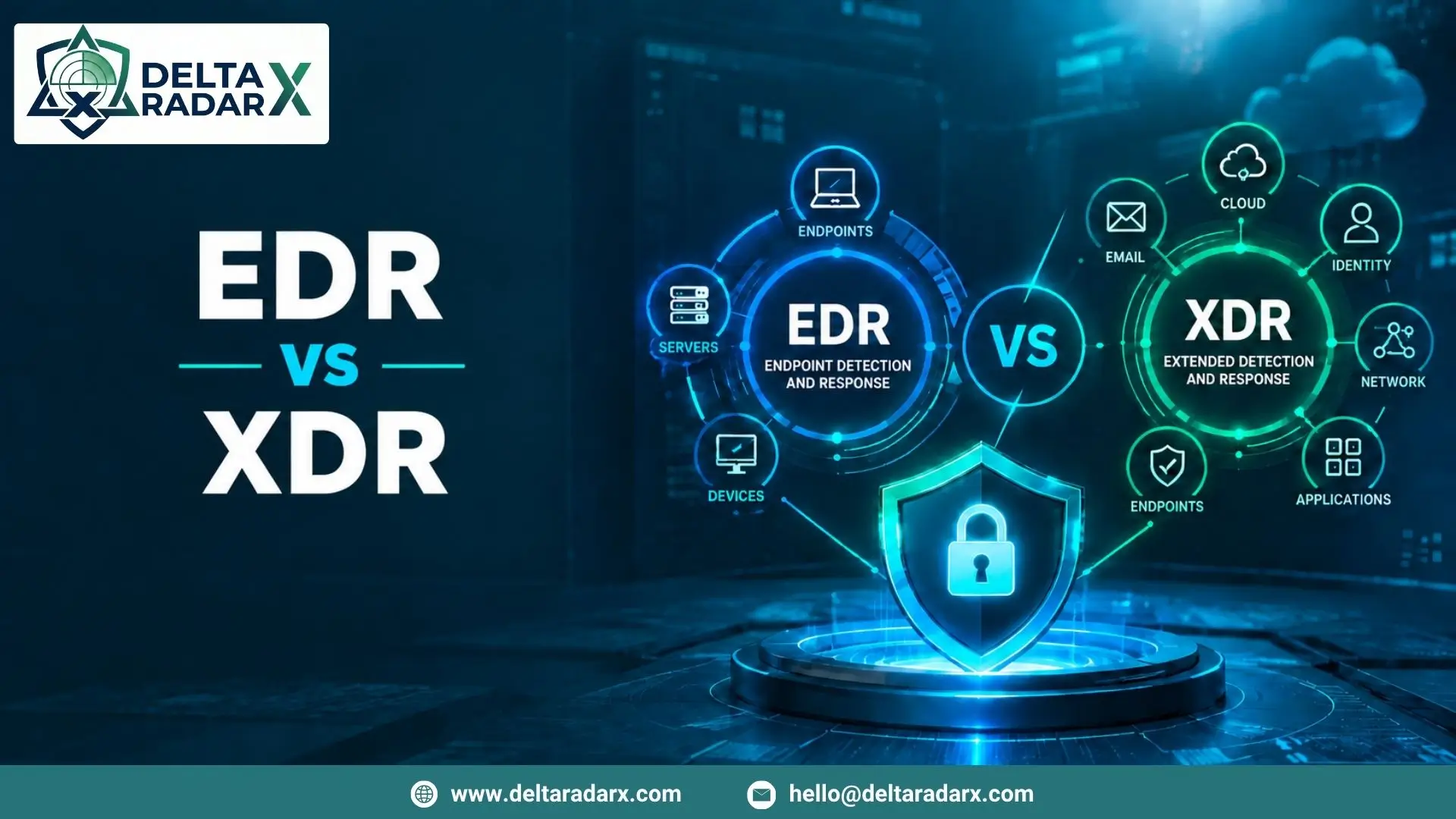
EDR solutions monitor endpoint processes, files, network connections, and user activity. Behavioral detection can identify suspicious actions associated with ransomware even when the exact malware sample has not previously been seen.
Endpoint monitoring is particularly important because many ransomware attacks eventually involve large-scale changes to files and system activity. An Endpoint Monitoring Solution can provide additional visibility into suspicious endpoint behavior and help security teams investigate potential threats.
SIEM
A SIEM platform collects security events from endpoints, servers, firewalls, identity systems, cloud platforms, and other sources.
By correlating events from multiple systems, SIEM can help identify patterns that may indicate an ongoing ransomware attack.
For example, suspicious authentication activity followed by privilege escalation, unusual endpoint behavior, and large-scale file modifications could create a much stronger ransomware signal than any individual event.
Threat Intelligence
Threat intelligence can provide information about known malicious IP addresses, domains, file hashes, ransomware groups, and other indicators.
Security teams can use this information to add context to suspicious activity and improve detection.
Network Monitoring
Network monitoring can help identify unusual communication between compromised systems and external infrastructure. It can also help security teams identify suspicious lateral movement inside the environment.
Ransomware Prevention Strategies
Detection is important, but preventing ransomware from successfully spreading should remain a primary objective.
Keep Systems Updated
Regularly patch operating systems, applications, servers, and security technologies. Vulnerabilities in outdated software can provide attackers with opportunities to gain access.
Use Strong Authentication
Multi-factor authentication can reduce the risk associated with stolen passwords and compromised accounts.
Organizations should prioritize MFA for administrative accounts, remote access, cloud services, and other high-value systems.
Apply Least Privilege
Users and applications should have only the permissions they require. Limiting unnecessary administrative privileges can make it harder for attackers to move through the environment.
Segment the Network
Network segmentation can limit the ability of attackers to move between systems. Critical servers, databases, endpoints, and backup infrastructure should not automatically have unrestricted access to one another.
Maintain Secure Backups
Reliable backups are one of the most important ransomware recovery controls. Organizations should maintain multiple backup copies and ensure that critical backups are protected from unauthorized modification or deletion.
Backups should also be tested regularly to confirm that data can actually be restored when needed.
Train Employees
Phishing remains an important attack vector. Employees should understand how to identify suspicious emails, attachments, links, and credential requests.
Regular security awareness training can reduce the likelihood of successful social engineering attacks.
The Role of Security Monitoring
Continuous security monitoring allows organizations to identify suspicious activity before it becomes a major incident.
Security teams can monitor endpoint behavior, authentication events, network traffic, cloud activity, and system changes. Centralized monitoring also makes it easier to correlate multiple indicators associated with an attack.
Organizations that lack sufficient internal security resources may use Managed SIEM Services to support continuous log monitoring, alert analysis, threat detection, and security event correlation.
Effective monitoring should focus on meaningful security signals rather than simply generating large numbers of alerts.
What to Do During a Ransomware Attack
If ransomware activity is detected, organizations should follow their incident response plan immediately.
Isolate Affected Systems
Compromised endpoints or servers may need to be isolated from the network to prevent the ransomware from spreading.
Protect Critical Systems
Security teams should prioritize critical infrastructure, backup systems, domain controllers, databases, and other high-value resources.
Investigate the Initial Access
Understanding how attackers entered the environment is essential. Teams should investigate phishing messages, compromised credentials, vulnerabilities, exposed services, and other potential entry points.
Preserve Evidence
Relevant logs, endpoint telemetry, suspicious files, network information, and other evidence should be preserved for investigation and forensic analysis.
Initiate Response Procedures
Organizations should follow established incident response procedures and involve appropriate security, IT, legal, and management teams.
Automation can help accelerate predefined containment actions. For suitable incidents, Automated Incident Response can assist with tasks such as endpoint isolation, malicious indicator blocking, alert enrichment, and notification.
Ransomware Recovery and Backup Strategy
Recovery should begin only after security teams have established that the threat has been contained.
Organizations should identify affected systems, remove malicious components, address the original security weakness, and verify that restored systems are clean before returning them to production.
A strong backup strategy should include protected copies that attackers cannot easily modify or delete. Recovery procedures should also be tested regularly because an untested backup may not provide reliable protection during a real incident.
Building a Strong Ransomware Defense
Effective ransomware protection requires multiple layers of security rather than dependence on one technology.
Organizations should combine:
- Endpoint security and EDR
- Continuous security monitoring
- SIEM and centralized log management
- Threat intelligence
- Network segmentation
- Multi-factor authentication
- Least-privilege access
- Vulnerability management
- Secure and tested backups
- Employee security awareness
- Incident response planning
- Automated response for appropriate scenarios
These layers create multiple opportunities to detect, prevent, contain, and recover from ransomware attacks.
Final Considerations
Ransomware Detection and Prevention is an ongoing cybersecurity process. Organizations need to identify suspicious behavior early, reduce opportunities for attackers to gain access, limit lateral movement, and maintain reliable recovery capabilities.
Behavior-based endpoint detection, SIEM correlation, continuous monitoring, threat intelligence, secure backups, strong authentication, and employee awareness can work together to create a stronger defense.
Most importantly, organizations should regularly test their detection and response processes. Ransomware defenses are most effective when security teams know what signals to monitor, how to contain an incident, and how to recover critical systems safely.