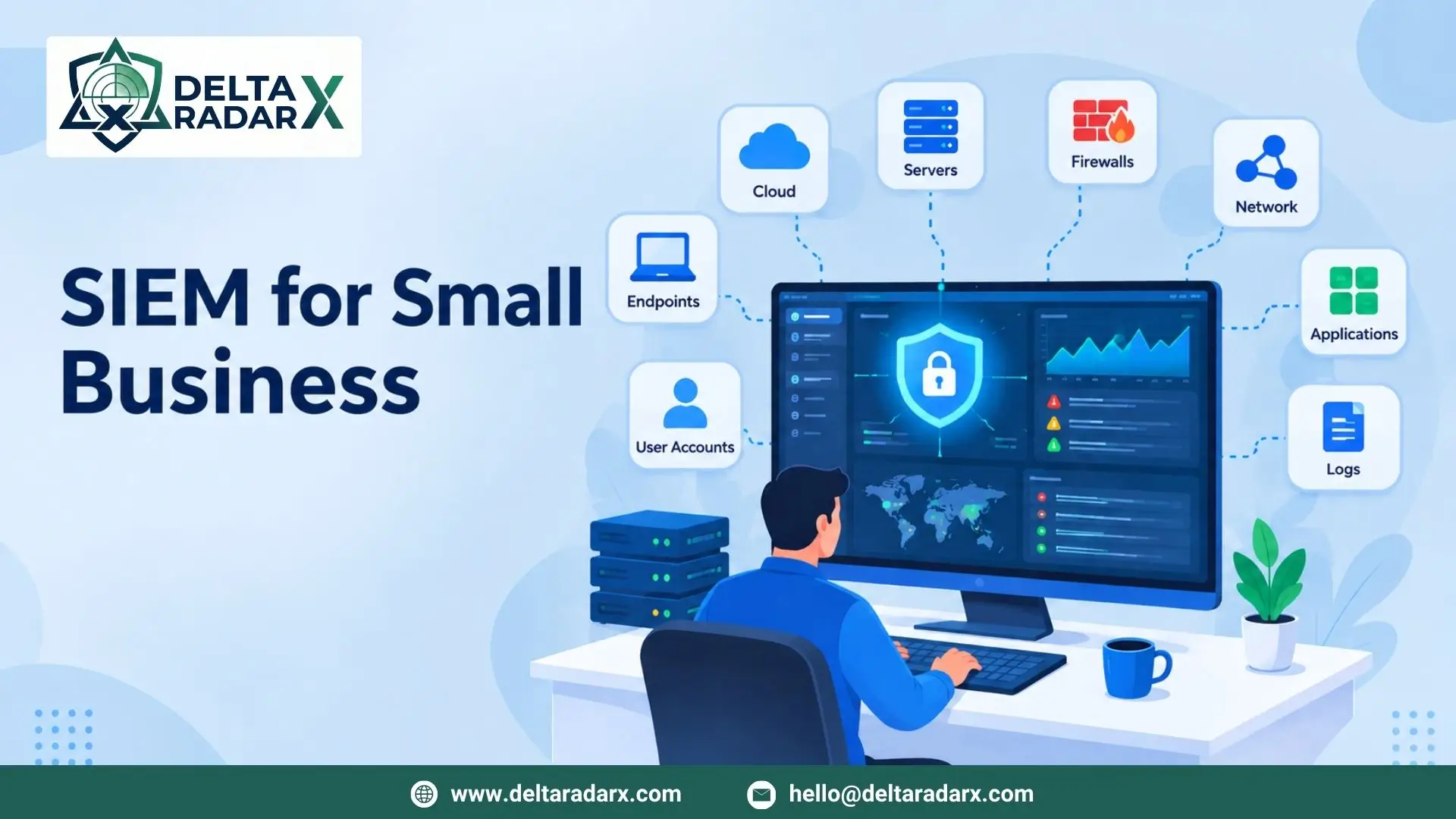

Modern organizations generate enormous amounts of data from servers, applications, endpoints, firewalls, cloud platforms, authentication systems, and network devices. These logs contain valuable information about system activity, security events, user behavior, and potential threats.
When logs are stored across separate systems, security teams can struggle to find relevant information quickly. Centralized Log Management solves this challenge by collecting logs from multiple sources and bringing them into a centralized environment where they can be stored, searched, analyzed, and monitored more efficiently.
For organizations evaluating a centralized log management solution, the right platform can improve security visibility, simplify investigations, support compliance, and provide a stronger foundation for security operations.
What Is Centralized Log Management?
Centralized Log Management is the process of collecting, organizing, storing, monitoring, and analyzing logs from different systems in one central location.
Instead of checking individual servers or applications separately, security and IT teams can access logs through a centralized platform.
Logs may come from:
- Servers and workstations
- Firewalls and network devices
- Applications
- Cloud platforms
- Databases
- Authentication systems
- Endpoints
- Security tools
- VPNs and remote access systems
Centralized logging gives organizations a unified view of activity across their IT environment.
Why Do Businesses Need Centralized Logging?
Without centralized logging, important security information can become fragmented across different devices and platforms.
For example, a failed login may appear in an authentication log, while a related network connection may appear in a firewall log. If these events are stored separately, identifying a potential attack can take significantly longer.
Centralized log management makes it easier to bring related information together.
It can help organizations:
- Improve visibility
- Detect suspicious activity
- Investigate security incidents
- Search historical events
- Monitor infrastructure
- Support compliance requirements
- Reduce manual log analysis
- Improve troubleshooting
How Does Centralized Log Management Work?
A centralized log management system generally follows several stages.
1. Log Collection
The first step is collecting logs from different sources. Agents, connectors, APIs, or other collection methods can send log data from servers, applications, cloud environments, endpoints, and network devices.
2. Log Aggregation
Collected logs are aggregated into a centralized platform. This allows information from different systems to be accessed through a common interface.
3. Log Normalization
Different systems can generate logs in different formats. Normalization helps organize this information into a more consistent structure so that security teams can search and analyze it more effectively.
4. Storage and Retention
Logs are stored according to organizational requirements. Retention policies can determine how long different types of logs should remain available for security investigations, operational troubleshooting, or compliance purposes.
5. Search and Analysis
Security and IT teams can search historical logs and investigate specific events, users, IP addresses, devices, applications, or time periods.
6. Monitoring and Alerting
Important events can trigger alerts based on predefined rules, suspicious patterns, or security conditions.
This allows teams to identify potentially important activity without manually reviewing every individual log.
Types of Logs Organizations Should Collect
A strong centralized logging strategy should cover the systems most important to security and operations.
Security Logs
Security logs can contain authentication events, access attempts, privilege changes, and other activity relevant to threat detection.
Application Logs
Application logs provide information about application errors, user activity, transactions, and potentially suspicious behavior.
Server Logs
Server logs can help organizations monitor system activity, errors, authentication events, and unusual processes.
Network Logs
Firewalls, routers, switches, VPNs, and other network devices can provide valuable information about connections and traffic.
Cloud Logs
Cloud platforms generate logs related to authentication, configuration changes, resource access, API activity, and other events.
Endpoint Logs
Endpoint data can provide visibility into processes, applications, file activity, and security events occurring on employee devices.
Organizations can strengthen this visibility through an Endpoint Monitoring Solution that helps collect and monitor endpoint security activity.
Key Features of a Centralized Log Management Solution
When evaluating a log management platform, businesses should consider several important capabilities.
Real-Time Log Monitoring
Real-time monitoring allows security teams to identify important events as they occur instead of relying entirely on historical analysis.
Advanced Search
Security analysts should be able to quickly search large volumes of logs using relevant fields such as IP addresses, usernames, timestamps, hostnames, applications, or event types.
Log Correlation
Correlation can connect related events from different sources and help security teams identify patterns that may indicate a security incident.
Automated Alerting
Automated alerts can notify security teams when predefined conditions or suspicious behaviors are detected.
Scalable Log Collection
The solution should be capable of handling increasing log volumes as organizations add more users, applications, devices, and cloud services.
Log Retention
Flexible retention policies allow businesses to manage storage requirements while keeping important historical data available for investigations.
Compliance Support
Centralized logs can provide useful evidence for audits, security reviews, and regulatory requirements where logging and retention are required.
Centralized Log Management vs. Traditional Log Storage
Traditional logging often means that each system stores its own logs locally. Although this approach can work for small environments, it becomes difficult to manage as infrastructure grows.
Centralized log management provides a unified environment for collecting and searching logs.
| Traditional Log Storage | Centralized Log Management |
|---|---|
| Logs remain distributed | Logs are collected centrally |
| Manual investigation | Centralized searching |
| Limited visibility | Broader visibility |
| Difficult cross-system analysis | Easier event correlation |
| Separate monitoring | Centralized monitoring |
| More difficult investigations | Faster security investigations |
Centralization does not eliminate the need for individual system logs, but it makes those logs significantly easier to manage and analyze.
Centralized Logging and SIEM
Centralized log management and SIEM are closely connected, but they are not exactly the same.
A log management platform primarily focuses on collecting, storing, searching, and managing log data. SIEM extends these capabilities with security-focused analysis, event correlation, threat detection, alert prioritization, and security investigation workflows.
Organizations that require broader security monitoring can combine centralized logging with Managed SIEM Services to continuously monitor logs and investigate potential threats.
For example, authentication logs, firewall events, endpoint activity, and cloud events can be correlated to identify patterns that may indicate compromised credentials or unauthorized access.
Benefits of Centralized Log Management
Improved Security Visibility
Security teams gain a more complete view of activity across their technology environment.
Faster Incident Investigation
Analysts can search centralized data instead of manually checking multiple systems.
Better Threat Detection
Centralized event data makes it easier to identify unusual patterns across different sources.
Simplified Troubleshooting
IT teams can investigate application errors, server problems, and network issues using a centralized source of information.
Stronger Compliance
Centralized logging can make it easier to maintain records needed for audits and security assessments.
Reduced Operational Complexity
A centralized platform reduces the need to manage multiple independent logging and monitoring processes.
How Centralized Log Management Improves Threat Detection
Attackers rarely interact with only one system. A security incident may involve multiple devices, accounts, applications, and network connections.
For example, an attacker may first compromise an employee account, authenticate from an unusual location, access a cloud application, and then attempt to connect to an internal resource.
Looking at each event individually may not immediately reveal the attack.
Centralized logging makes it possible to examine these events together and identify relationships between them.
This additional context can help security analysts distinguish normal activity from potentially malicious behavior.
Log Management for Compliance and Auditing
Many organizations need to maintain records of system and security activity for internal governance, audits, or regulatory requirements.
Centralized log management can make these records easier to organize, search, retain, and retrieve.
However, organizations should define appropriate retention policies based on their specific regulatory, contractual, and business requirements.
How to Choose a Centralized Log Management Solution
Businesses should consider several factors when comparing solutions.
Scalability: The platform should handle current and future log volumes.
Integrations: It should support the organization’s servers, endpoints, applications, cloud platforms, network devices, and security technologies.
Search capabilities: Analysts should be able to find relevant events quickly.
Security monitoring: Look for useful alerting, correlation, and detection capabilities.
Retention: Consider storage requirements and how long historical logs need to remain accessible.
Automation: Automated collection, enrichment, alerting, and workflows can reduce manual effort.
Ease of use: Security teams should be able to navigate, search, and investigate logs without unnecessary complexity.
Managed Centralized Log Management
Managing large volumes of logs internally can require dedicated infrastructure, security expertise, and continuous monitoring.
Managed services can provide organizations with professional monitoring and log management capabilities without requiring them to build and maintain every part of the operation internally.
A managed approach can be particularly useful for organizations with limited security teams or those that require continuous monitoring.
Centralized Log Management at DeltaRadarX
DeltaRadarX provides centralized security monitoring through capabilities including 24/7 SOC operations, real-time SIEM and log monitoring, Managed Detection and Response (MDR), incident handling, threat intelligence, SOAR automation, EDR, and network and firewall monitoring.
By bringing security events from different parts of an organization’s environment into a centralized monitoring process, security teams can gain broader visibility and investigate suspicious activity more efficiently.
Additional capabilities such as vulnerability assessments, compliance reporting, and co-managed SOC support can further strengthen an organization’s security operations.
Final Considerations
Centralized Log Management provides organizations with a structured way to collect, store, search, and monitor logs from across their technology environment.
By centralizing security, application, endpoint, server, network, and cloud logs, organizations can improve visibility, accelerate investigations, simplify troubleshooting, and create a stronger foundation for security monitoring.
For businesses evaluating a centralized log management solution, the most important considerations include scalability, integrations, search capabilities, retention, alerting, security analytics, and the ability to support broader security operations.
When combined with SIEM, threat intelligence, endpoint monitoring, and incident response capabilities, centralized logging can become an important part of a modern cybersecurity strategy.