Cyber threats can happen at any time. Businesses need to monitor their networks, endpoints, users, and applications every day.
However, many companies do not have a large security team. They may also lack the tools and expertise needed for 24/7 monitoring.
This is where managed SOC services can help.
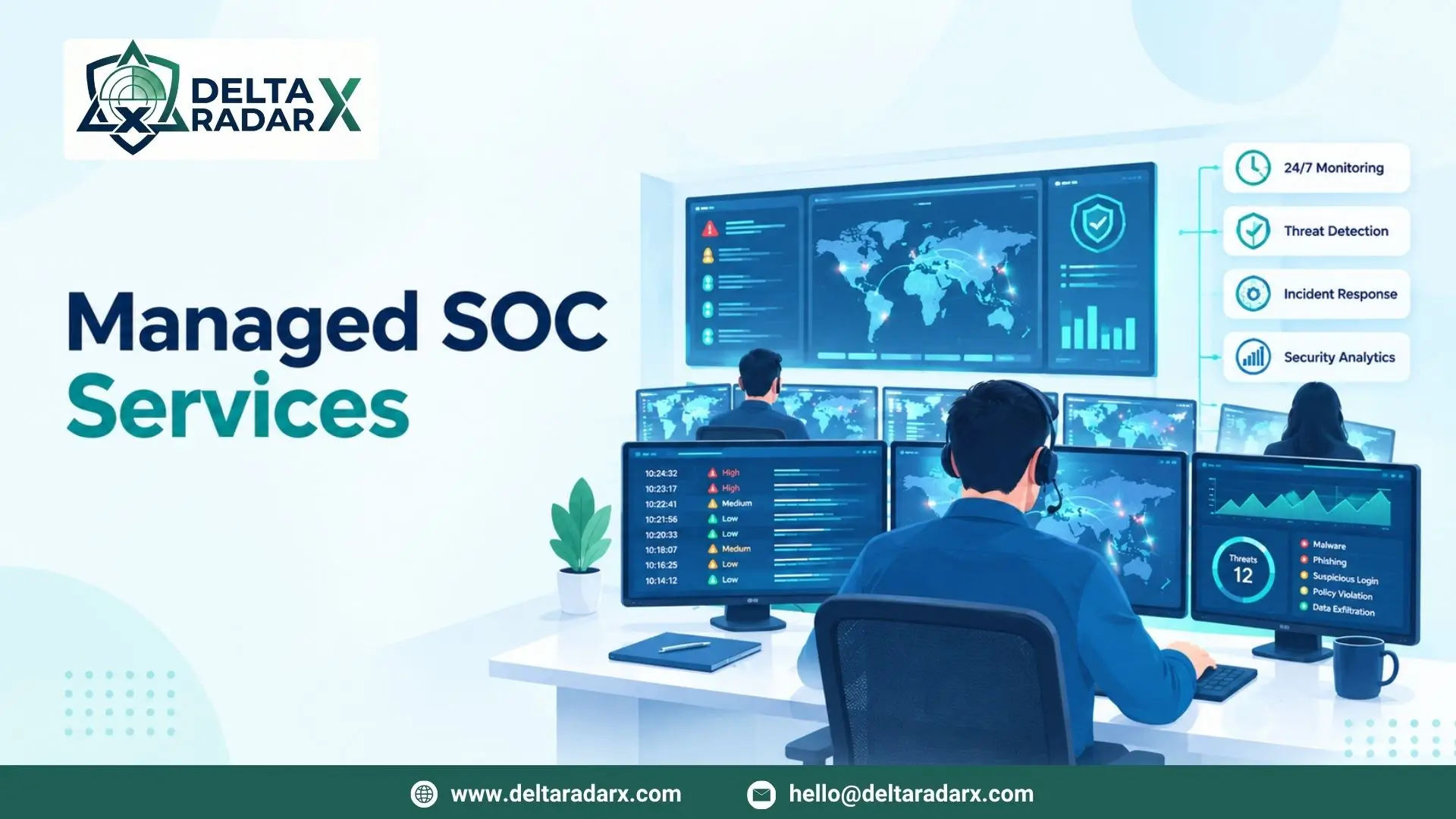
A managed Security Operations Center provides continuous security monitoring and support. It helps businesses detect suspicious activity, investigate alerts, and respond to potential threats.
What Are Managed SOC Services?
Managed SOC services are security services provided by an external security team.
A Security Operations Center, or SOC, monitors an organization’s IT environment. Security analysts review alerts and investigate suspicious activity.
A managed SOC performs these tasks on behalf of a business.
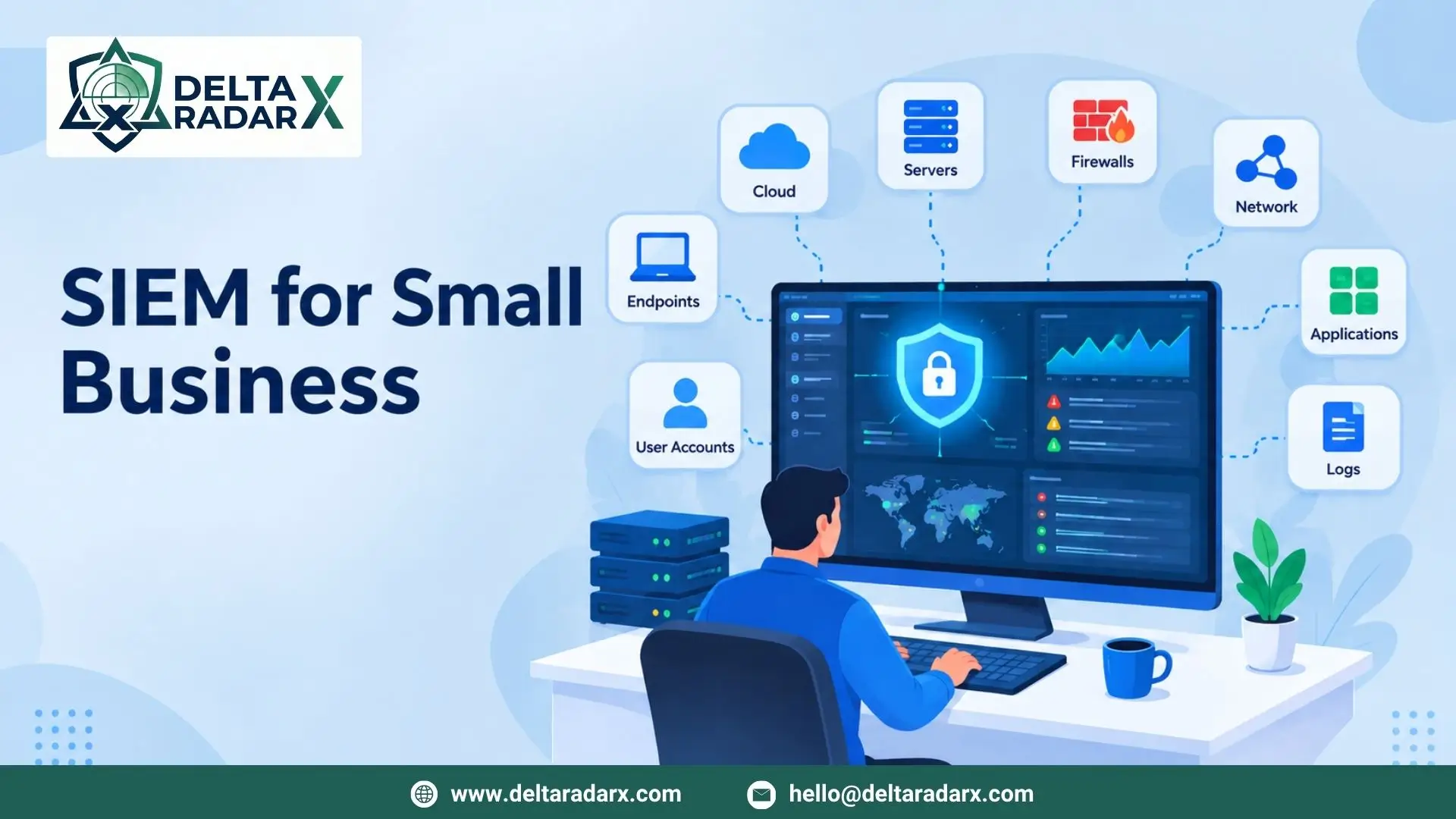
The service can monitor:
- Networks
- Endpoints
- Servers
- Firewalls
- Cloud environments
- Applications
- User accounts
- Security logs
The goal is to identify threats early and support a fast response.
How Do Managed SOC Services Work?
A managed SOC follows a continuous monitoring process.
1. Collect Security Data
First, the SOC collects security data from different systems.
These sources can include firewalls, servers, endpoints, cloud platforms, and applications.
The data gives analysts visibility into the business environment.
2. Monitor Security Events
Next, security analysts monitor the collected data.
Security tools look for unusual activity. They can also generate alerts when specific rules are triggered.
3. Investigate Alerts
Not every alert indicates an attack.
Therefore, analysts investigate important alerts before taking action.
They review related logs and system activity. This helps them understand what happened.
4. Identify Threats
If the activity looks malicious, analysts investigate it further.
They may check:
- Affected devices
- User accounts
- Network connections
- File activity
- Login history
- Threat intelligence
This provides more context about the incident.
5. Respond to the Incident
After confirming a threat, the SOC can support response actions.
Depending on the service, this may include isolating an endpoint, blocking malicious traffic, or disabling a compromised account.
6. Report the Incident
The SOC can also document important incidents.
Reports can explain what happened, which systems were affected, and what actions were taken.
Why Do Businesses Need a Managed SOC?
Cybersecurity requires continuous attention.
However, many businesses cannot maintain a large internal SOC.
Building an internal SOC can require:
- Security analysts
- Monitoring tools
- SIEM technology
- EDR solutions
- Threat intelligence
- Security processes
- 24/7 staffing
These requirements can increase operational costs.
A managed SOC gives businesses access to security monitoring without building the entire operation internally.
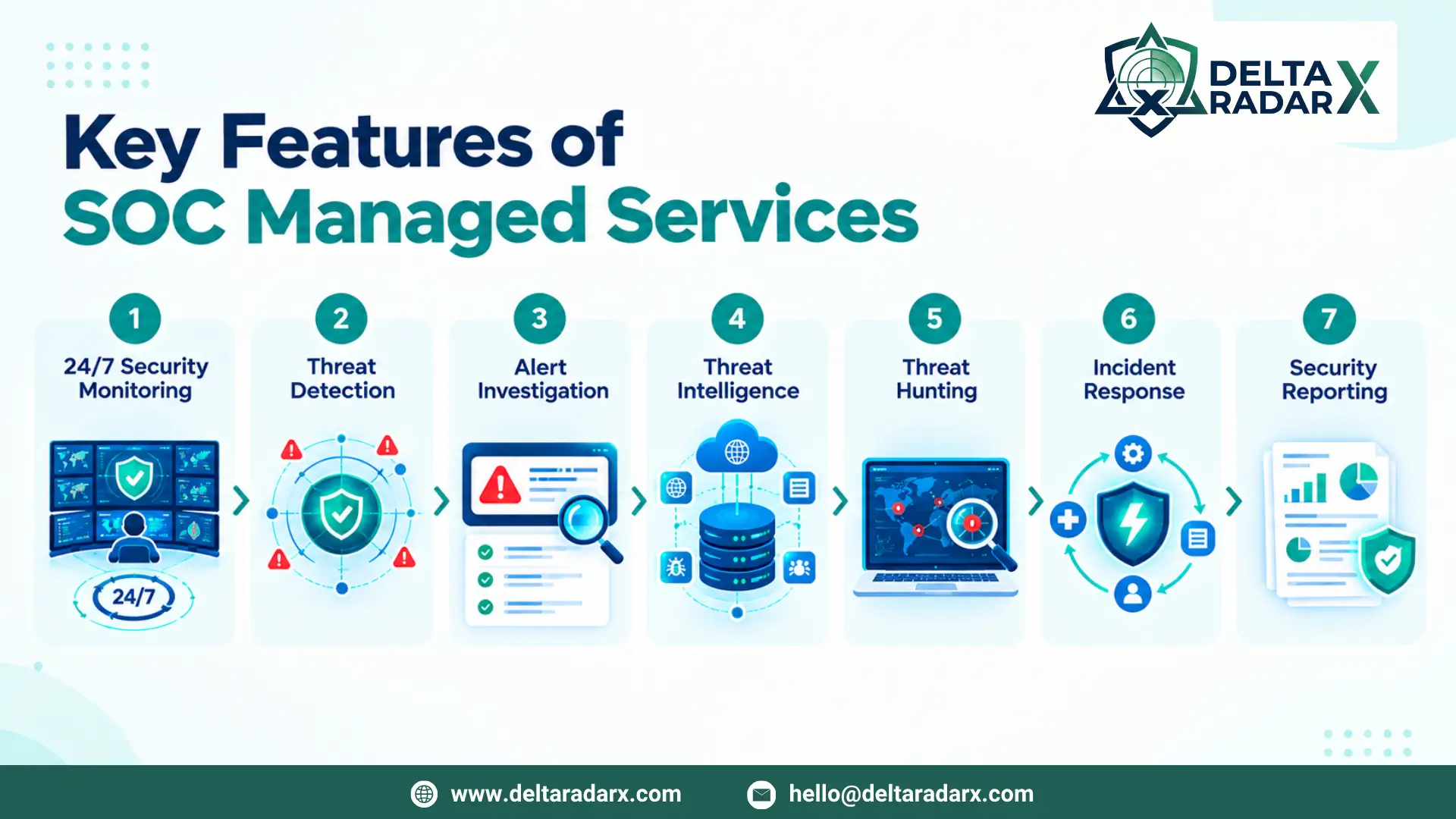
Key Features of SOC Managed Services
Different providers offer different capabilities.
However, many SOC managed services include several core features.
24/7 Security Monitoring
Security threats do not follow business hours.
Therefore, continuous monitoring can help businesses identify suspicious activity at any time.
Threat Detection
SOC analysts use security tools and detection rules to identify potential threats.
They can monitor activity across endpoints, networks, servers, and cloud systems.
Alert Investigation
A managed SOC can investigate security alerts.
Analysts review related events to determine whether an alert requires action.
Threat Intelligence
Threat intelligence can provide information about known malicious IP addresses, domains, file hashes, and attack techniques.
Analysts can use this information during investigations.
Threat Hunting
Threat hunting involves actively searching for suspicious activity.
Analysts do not rely only on automated alerts. They can also search security data for unusual patterns.
Incident Response
A managed SOC can support incident response activities.
The exact level of response depends on the service package and provider.
Security Reporting
Regular reports can help businesses understand their security activity.
Reports may include alerts, incidents, trends, and response actions.
Managed SOC as a Service
Managed SOC as a service provides SOC capabilities through an external security provider.
The provider operates the monitoring environment and supplies security expertise.
This model can be useful for businesses that do not want to build a complete internal SOC.
The provider may handle:
- Security monitoring
- Alert analysis
- Threat detection
- Threat hunting
- Incident investigation
- Security reporting
- Response support
The exact services depend on the provider and the selected package.
Managed SOC vs Internal SOC
Businesses can choose between an internal SOC and an external managed SOC.
An internal SOC is operated by the organization’s own employees.
A managed SOC is operated by an external security provider.
| Feature | Internal SOC | Managed SOC |
|---|---|---|
| Security staff | Hired internally | Provided by a security provider |
| Monitoring | Managed internally | Managed by the provider |
| Infrastructure | Built by the business | Provided or managed by the provider |
| 24/7 staffing | Requires internal shifts | Can be included in the service |
| Management | Internal | Shared or provider-managed |
| Scalability | Requires additional resources | Can scale with the service |
The right model depends on the organization’s size, security requirements, budget, and internal expertise.
Managed SOC vs MDR
Managed SOC and MDR are closely related.
However, they are not exactly the same.
A managed SOC focuses on security operations and continuous monitoring.
MDR focuses specifically on managed detection and response.
An MDR service can include threat detection, investigation, threat hunting, and response.
In many environments, SOC and MDR capabilities can work together.
For example, SOC analysts can monitor security events while MDR processes can support threat investigation and response.
Managed SOC and SIEM
SIEM is an important technology used by many SOC teams.
A SIEM collects security logs from different systems.
It then helps analysts search, correlate, and analyze those events.
A managed SOC can monitor the SIEM and investigate important alerts.
This can reduce the workload for businesses that do not have internal SIEM specialists.
SIEM integration can also connect data from firewalls, endpoints, servers, applications, and cloud platforms.
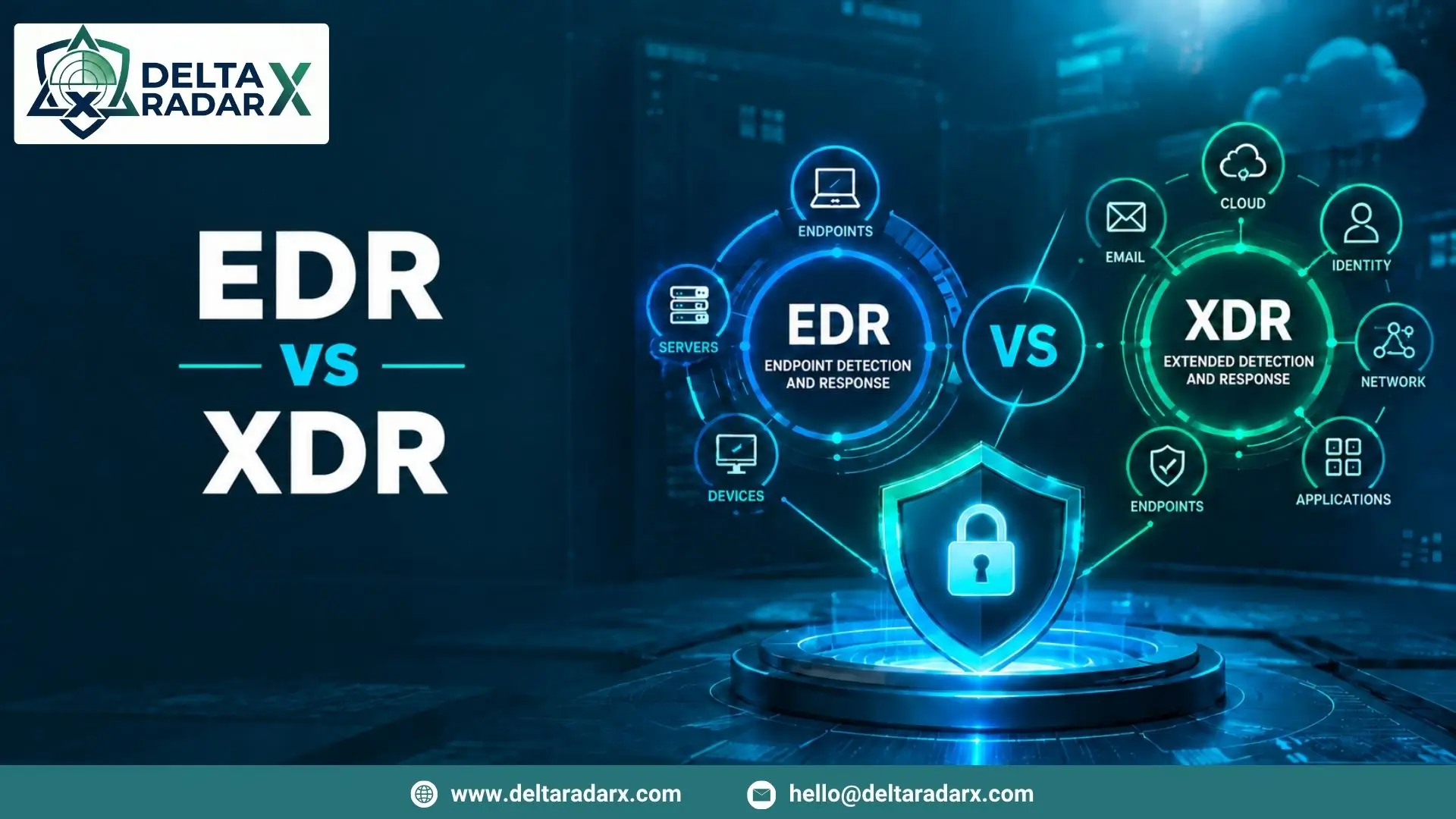
Managed SOC and EDR
EDR provides visibility into endpoint activity.
It can detect suspicious processes, files, connections, and user activity.
A managed SOC can monitor EDR alerts and investigate suspicious endpoint behavior.
For example, an unusual process may trigger an alert.
The SOC team can then review the related activity and determine whether the endpoint requires containment.
Benefits of Managed SOC Services
24/7 Security Monitoring
A managed SOC can monitor security activity around the clock.
This helps businesses maintain visibility outside normal working hours.
Access to Security Expertise
Businesses can gain access to trained security analysts.
This can be useful when internal teams have limited cybersecurity experience.
Faster Alert Investigation
SOC analysts can investigate alerts and provide additional context.
This can help reduce the time needed to understand security events.
Better Security Visibility
A managed SOC can monitor multiple security systems.
This creates a more complete view of the organization’s environment.
Reduced Operational Workload
Internal IT teams do not have to handle every security alert themselves.
As a result, they can focus on other technology and business priorities.
Scalable Security
Managed services can adapt as the organization grows.
Businesses can add systems and monitoring requirements over time.
Predictable Security Operations
A managed service can provide an established monitoring process.
This can make security operations more consistent.
Common Threats Managed SOC Teams Monitor
Managed SOC teams can monitor many types of threats.
Phishing Attacks
Phishing attacks can steal credentials or deliver malware.
SOC analysts can investigate suspicious email and account activity.
Ransomware
Ransomware can encrypt files and disrupt business operations.
SOC teams can monitor suspicious endpoint and network activity.
Credential Attacks
Repeated login failures can indicate an attempted credential attack.
Analysts can investigate unusual authentication activity.
Malware
Malware can create suspicious processes and network connections.
EDR and SIEM data can help analysts investigate these events.
Network Intrusions
Attackers may attempt to gain unauthorized network access.
Firewall and network logs can help SOC teams identify suspicious connections.
For organizations that need deeper visibility, firewall log monitoring can provide useful information about network activity.
Insider Threats
Compromised or misused accounts can create security risks.
SOC analysts can investigate unusual user behavior and access patterns.
Managed SOC for Small Businesses
Small businesses may have limited security resources.
They may not have enough staff to monitor security alerts around the clock.
A managed SOC can provide access to security monitoring without requiring a large internal team.
It can also help small businesses monitor important systems as they grow.
The service should still match the company’s security requirements and budget.
Managed SOC for Cloud Environments
Cloud platforms generate large amounts of security data.
A managed SOC can monitor cloud activity and investigate suspicious events.
This may include:
- Cloud authentication
- API activity
- Configuration changes
- Cloud workloads
- Network traffic
- Data access
- User activity
Cloud monitoring can help businesses identify unusual behavior across their cloud environment.
Managed SOC for Remote Workforces
Remote employees can access business systems from different locations.
This creates additional security monitoring requirements.
A managed SOC can monitor remote logins, endpoint activity, and application access.
For example, an unusual login followed by suspicious endpoint activity may require investigation.
Managed SOC Services at DeltaRadarX
DeltaRadarX provides managed security capabilities for businesses that need continuous monitoring and security support.
Its services can include 24/7 SOC monitoring, real-time SIEM and log monitoring, Managed Detection and Response (MDR), EDR, incident handling, SOAR automation, firewall and network monitoring, vulnerability and asset exposure auditing, and compliance reporting.
These capabilities can work together.
For example, SIEM can collect security events from multiple systems. EDR can provide endpoint visibility.
SOC analysts can then investigate alerts and coordinate response actions.
This creates a more connected approach to security monitoring.
How to Choose Managed SOC Services
Businesses should review several factors before selecting a provider.
24/7 Monitoring
Check whether the provider offers continuous monitoring.
This is important for businesses that need security coverage outside office hours.
Security Technologies
Ask which technologies the provider supports.
These may include:
- SIEM
- EDR
- Firewalls
- Cloud platforms
- Network monitoring
- Threat intelligence
Alert Investigation
Find out how the provider handles security alerts.
Ask how analysts investigate and classify potential threats.
Incident Response
Check whether the service includes response support.
Also, understand which actions the provider can take during an incident.
Reporting
Ask about security reports and dashboards.
Good reporting can help management understand security activity.
Scalability
Choose a service that can support future growth.
The provider should be able to monitor additional users, devices, and systems as needed.
Integration
The service should work with your existing security tools.
This can make deployment easier and improve visibility.
Final Thoughts
Managed SOC services can help businesses improve security monitoring without building a complete internal Security Operations Center.
A managed SOC can monitor security events, investigate alerts, detect threats, and support incident response.
For businesses with limited security resources, SOC managed services can provide access to security expertise and continuous monitoring.
At the same time, managed SOC as a service can provide a flexible way to access SOC capabilities through an external provider.
The right service depends on the organization’s size, security requirements, existing technology, and operational needs.