
Cybersecurity teams face a growing number of threats every day. Security tools collect alerts from endpoints, networks, cloud platforms, applications, firewalls, and identity systems.
Reviewing all this information manually can be difficult.
Traditional security tools rely heavily on predefined rules and known indicators. While these methods remain important, they may not always identify new or unusual attack patterns quickly.
AI threat detection helps security teams analyze large volumes of security data and identify suspicious behavior more efficiently. Artificial intelligence can recognize patterns, detect anomalies, prioritize alerts, and provide additional context during investigations.
This does not mean AI replaces cybersecurity professionals.
Instead, AI can support security analysts by helping them find important threats faster and reduce the time spent reviewing unnecessary alerts.
What Is AI Threat Detection?
AI threat detection is the use of artificial intelligence and machine learning technologies to identify potential cybersecurity threats.
AI systems can analyze large amounts of security data and look for patterns that may indicate suspicious or malicious activity.
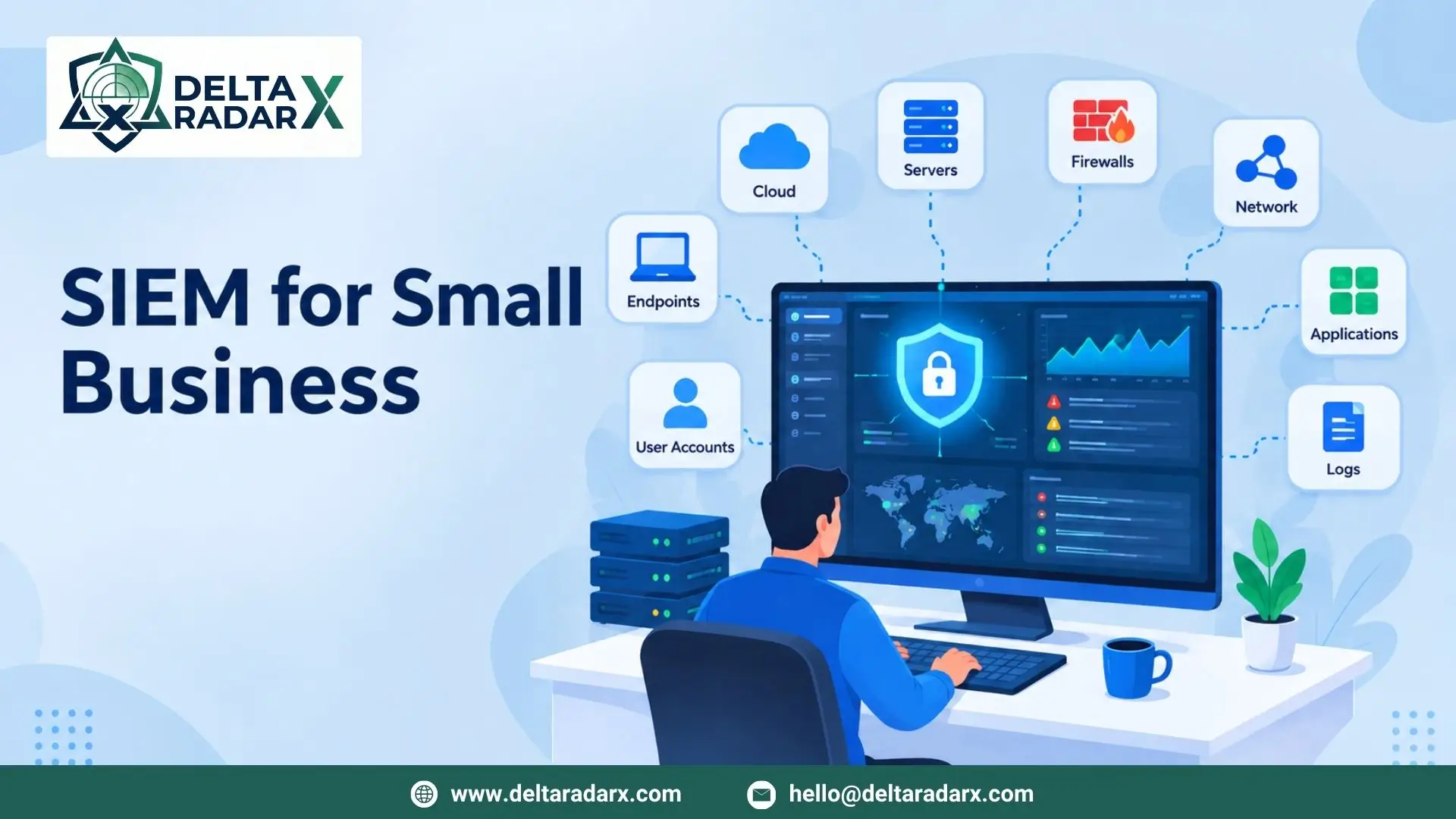
The data can come from sources such as:
- Endpoints
- Servers
- Firewalls
- Networks
- Cloud environments
- Applications
- User accounts
- Authentication systems
- Security logs
Instead of relying only on predefined detection rules, AI can also analyze behavior and identify activity that appears unusual.
For example, an AI system may detect a user accessing systems at an unusual time, from an unfamiliar location, while performing actions that differ from their normal behavior.
Individually, these events may not always appear dangerous.
However, when analyzed together, they may indicate a potential security risk.
Why Is AI Threat Detection Important?
Modern organizations generate a large amount of security data.
A single business may receive thousands of alerts every day.
Security analysts must determine which alerts require immediate attention.
This process can become difficult when teams have limited resources.
AI can help by analyzing security events more quickly and identifying patterns that may require investigation.
Some important benefits include:
- Faster analysis of security data
- Improved anomaly detection
- Better alert prioritization
- Reduced manual work
- Faster threat investigation
- Support for threat hunting
- Improved security visibility
AI can therefore help security teams focus their attention on the events that may present the greatest risk.
How Does AI Threat Detection Work?
AI-based security systems analyze information from different sources and look for patterns.
The exact process can vary depending on the technology being used.
However, several common stages are involved.
Data Collection
The process begins with collecting security information.
AI systems can analyze data from endpoints, networks, cloud platforms, identity systems, and other security tools.
The quality and availability of data can affect how effectively a security system detects threats.
For this reason, organizations need good visibility across their environments.
Pattern Analysis
AI analyzes collected information and looks for patterns.
These patterns can include normal user behavior, common network activity, application processes, and other security events.
Over time, the system can identify behavior that differs from the expected pattern.
Anomaly Detection
Anomaly detection is an important part of AI-based cybersecurity.
An anomaly is activity that appears unusual compared with normal behavior.
For example, an employee may normally access company systems from one location during regular working hours.
If the same account suddenly accesses sensitive systems from a different country and performs unusual administrative actions, the activity may be considered suspicious.
AI can help identify these changes and flag them for investigation.
Alert Prioritization
Not every alert has the same level of risk.
AI can help analyze different factors and prioritize events based on their potential importance.
This may help analysts focus on high-risk activity first.
Threat Investigation
AI can provide additional context during an investigation.
It may connect related events from different systems and help analysts understand the sequence of activity.
For example, the system may connect a suspicious login with unusual endpoint behavior and unexpected network communication.
This broader context can make investigations more efficient.
AI and Machine Learning in Cybersecurity
Artificial intelligence and machine learning are closely related, but they are not exactly the same.
AI is a broader term that refers to technologies capable of performing tasks that normally require human intelligence.
Machine learning is a part of AI that focuses on learning patterns from data.
In cybersecurity, machine learning models can analyze large amounts of information and identify unusual behavior.
These technologies can support:
- Threat detection
- Malware analysis
- Behavioral analysis
- Alert prioritization
- Fraud detection
- Threat hunting
- Security automation
Machine learning can be particularly useful when organizations need to analyze large volumes of changing security data.
AI Threat Detection vs Traditional Threat Detection
Traditional threat detection often relies on predefined rules.
For example, a security tool may generate an alert when it detects a known malicious IP address.
This approach is useful for identifying known threats.
However, attackers can change their techniques.
A new attack may not match an existing rule or known indicator.
AI-based detection can add another layer of analysis.
Instead of looking only for known threats, it can also examine behavior and identify unusual patterns.
Traditional Detection
Traditional methods may rely on:
- Signatures
- Rules
- Known malicious IP addresses
- Known malware indicators
- Predefined detection patterns
These methods remain an important part of cybersecurity.
AI-Based Detection
AI-based systems can analyze:
- User behavior
- Process activity
- Network patterns
- Authentication events
- Cloud activity
- Historical security data
The goal is to identify behavior that may require further investigation.
The strongest security strategy often combines traditional detection methods with AI-supported analysis.
AI Threat Detection and Behavioral Analysis
Behavioral analysis focuses on how users, systems, and applications normally behave.
AI can help create a baseline of expected activity.
When behavior changes significantly, the system can identify the event as potentially unusual.
For example, AI may detect:
- Unusual login times
- Unexpected access attempts
- Abnormal data transfers
- Suspicious processes
- Unusual network connections
- Unexpected privilege changes
Behavioral analysis can be useful because attackers may use valid credentials or legitimate tools.
In these situations, signature-based detection alone may not provide enough information.
AI Threat Detection for Endpoint Security
Endpoints are common targets for cyberattacks.
Computers, servers, and other devices can be affected by malware, ransomware, credential attacks, and malicious processes.
AI can help analyze endpoint activity and identify unusual behavior.
For example, it may detect unexpected process execution or unusual changes to files.
Organizations can combine AI capabilities with Endpoint Threat Detection to improve visibility into suspicious activity across user devices and servers.
This approach can help security teams investigate endpoint events more effectively.
AI Threat Detection for Network Security
Network activity can provide important information about potential cyber threats.
AI can analyze traffic patterns and identify unusual communication.
For example, a system may suddenly begin communicating with an unfamiliar external server.
The connection may require further investigation.
AI-supported network monitoring can help identify:
- Unusual traffic patterns
- Suspicious connections
- Potential command and control activity
- Unexpected data transfers
- Lateral movement
Security analysts can then investigate the activity using information from other security sources.
AI Threat Detection in Cloud Environments
Cloud environments can generate large amounts of security information.
Organizations may operate multiple workloads, applications, identities, and services across different cloud platforms.
AI can help analyze this activity and identify unusual patterns.
For example, it may detect unexpected access attempts or suspicious workload behavior.
AI can support cloud security by analyzing:
- Cloud login activity
- Workload behavior
- Configuration changes
- Access patterns
- Network activity
- Privilege changes
When combined with strong security monitoring, AI can help organizations improve visibility across complex cloud environments.
AI Threat Detection and SIEM
A SIEM platform collects security events from multiple sources.
These events can provide valuable information for AI-based analysis.
AI can help security teams analyze SIEM data and identify patterns that may be difficult to detect manually.
For example, AI may connect events involving authentication, endpoint activity, firewall logs, and network traffic.
Organizations can use SIEM Integration to bring these security data sources together and improve centralized visibility.
A centralized security environment can provide AI systems with broader information for analysis.
However, the quality of detection still depends on the available data, security configuration, and investigation process.
AI Threat Detection and Threat Hunting
Threat hunting is a proactive cybersecurity activity.
Instead of waiting for a security alert, analysts actively search for signs of suspicious activity.
AI can support threat hunting by identifying unusual patterns across large amounts of data.
For example, AI may help analysts identify:
- Unusual account behavior
- Unexpected administrative actions
- Suspicious network activity
- Abnormal processes
- Possible indicators of compromise
AI can reduce the amount of information analysts need to review manually.
However, human expertise remains important.
Security professionals need to investigate suspicious findings and determine whether the activity represents a genuine threat.
The Role of Human Analysts in AI Threat Detection
AI can analyze information quickly.
However, it does not eliminate the need for security analysts.
Cybersecurity investigations often require context and professional judgment.
An event may appear suspicious but still have a legitimate explanation.
Security analysts can investigate the affected system, user activity, network connections, and historical events.
They can then determine whether the event requires action.
A strong security operation combines AI capabilities with human expertise.
AI helps analyze data and identify potential risks.
Human analysts investigate those risks and make informed decisions.
Benefits of AI Threat Detection
AI-supported cybersecurity can provide several benefits.
Faster Security Analysis
AI can analyze large volumes of security data more quickly than manual processes.
This can help security teams identify important activity sooner.
Improved Anomaly Detection
AI can identify behavior that differs from normal patterns.
This can help detect suspicious activity that does not match a known threat signature.
Reduced Alert Fatigue
Security teams may receive a large number of alerts.
AI can help prioritize events based on potential risk.
This allows analysts to focus on more important investigations.
Better Threat Context
AI can connect related security events.
This can help analysts understand the broader context of an incident.
Support for Continuous Monitoring
AI can support continuous analysis of security activity.
This can be useful for organizations that need ongoing security visibility.
Challenges of AI Threat Detection
AI can provide important benefits, but organizations should also understand its limitations.
False Positives
AI systems may identify legitimate activity as suspicious.
Security teams still need processes for investigating alerts.
Poor Data Quality
AI analysis depends on available data.
Incomplete or inaccurate security information can affect detection results.
Complex Security Environments
Organizations often use many different security tools.
Integrating information from multiple systems can be challenging.
Lack of Human Context
AI may identify unusual activity without fully understanding the business reason behind it.
Human analysts remain important for investigation and decision-making.
Evolving Threats
Attackers also adapt their techniques.
AI models and security controls need regular review and improvement.
AI Threat Detection Best Practices
Organizations can improve AI-supported security monitoring by following practical steps.
Maintain Good Security Visibility
Collect relevant security data from important systems.
This may include endpoints, networks, cloud platforms, and identity systems.
Combine AI With Human Expertise
AI should support analysts rather than replace them.
Human investigation provides important context.
Monitor Critical Assets
Prioritize systems that are important to the organization.
This may include critical servers, applications, identities, and cloud workloads.
Review Detection Results
Regularly review alerts and investigation results.
This can help improve detection rules and security processes.
Integrate Security Technologies
Different security tools provide different information.
Connecting these systems can provide better context during investigations.
Improve Continuously
Cyber threats continue to change.
Organizations should regularly review their AI models, detection capabilities, and security processes.
AI Threat Detection in Modern Security Operations
AI can play an important role in modern security operations.
A Security Operations Center can use AI to analyze alerts, identify suspicious patterns, and support security investigations.
However, AI is most effective when combined with other security capabilities.
These may include:
- SIEM monitoring
- Endpoint protection
- Threat intelligence
- Network monitoring
- Incident response
- Security automation
- Threat hunting
Organizations that need continuous security expertise can also use Managed Detection and Response Services to support monitoring, investigation, threat detection, and incident response.
This approach combines security technologies with human analysts.
AI Threat Detection at DeltaRadarX
Effective threat detection requires more than automated alerts.
Organizations need visibility, context, investigation, and an appropriate response process.
DeltaRadarX provides 24/7 SOC operations, real-time SIEM and log monitoring, Managed Detection and Response (MDR), incident handling, threat intelligence, SOAR automation, EDR, network and firewall monitoring, vulnerability assessments, and compliance reporting.
These capabilities can support a broader approach to AI-assisted security monitoring.
For example, AI may identify unusual activity across security data.
Security analysts can then investigate that activity using endpoint events, network traffic, firewall logs, and identity information.
This additional context can help determine whether the activity represents a genuine threat.
DeltaRadarX also provides co-managed SOC support for organizations with existing IT or security teams.
This model can provide additional monitoring capacity and cybersecurity expertise without requiring an organization to build a complete 24/7 security operation internally.
The Future of AI in Threat Detection
AI is likely to become increasingly important in cybersecurity.
Organizations continue to generate more security data as their digital environments grow.
AI can help security teams analyze this information and identify patterns more efficiently.
Future security operations may use AI to support faster detection, investigation, prioritization, and automation.
However, human cybersecurity expertise will continue to play an important role.
The most effective approach is likely to combine artificial intelligence with experienced analysts and strong security processes.
Final Thoughts
AI threat detection helps cybersecurity teams analyze large amounts of security information and identify suspicious behavior.
It can support anomaly detection, alert prioritization, behavioral analysis, and threat hunting.
AI is not a replacement for cybersecurity professionals.
Instead, it can help analysts work more efficiently by providing faster analysis and additional context.
Organizations should combine AI capabilities with security technologies, skilled analysts, and clear incident response procedures.
When used as part of a broader security strategy, AI can help organizations improve visibility, identify potential threats earlier, and respond more effectively.